Colocation continues to evolve every year as needs for storing mission critical information change. For many companies, balancing profitability of IT with constant repairs, downtime, and continuously improving security has become overwhelming. As such, colocation is in demand, simply because it makes good business sense.
When determining if colocation is the best solution for your company and how it aligns with your company’s long-term strategy, you may come across a few new terms. To help you during the discovery process, we created the following list of 8 key colocation terms that you can share with your team:
1. Hybrid Colocation – the act of storing data both on and off-site.
2. Rack Space – the amount of physical space you will need to house your servers off-site. 3. Cabinet Space – a cabinet is the term commonly used to reference one full rack (42-47 U). Half and full racks as well as space by the unit can be rented at most colocation facilities to house your company’s servers. 4. Cage Space – provides an added layer of physical security. The additional layer of protection provides you with the peace of mind that no one will have access to your highly sensitive date. 5. Uptime – refers to the availability of your servers and is often measured in a percentage. A data center’s estimated uptime is categorized by tiers. Tiers range from 1-4 or 99.61% – 99.99% expected uptime. What is your uptime? 6. N+1 Redundancy – have an independent back-up in case of failure to assure that your data remains available. A common example includes: back-up generators. 7. Service Level Agreement (SLA) – a contract outlining what level of service the provider will deliver and what consequences there will be for not abiding by those commitments. Addresses: performance, reliability, and support. 8. SSAE 16 SOC II – a detailed auditing report created by the AIPCA, is designed specifically to evaluate a data center’s security, availability, processing, integrity, confidentiality, and privacy. It also replaces the use of SAS 70.
ISG Technology is a full spectrum data center and information technology (IT) infrastructure company that also provides bandwidth, and an array of IT support services designed to help reduce costs, improve efficiency, and safeguard business critical data. A key component of that service is a support center based in Wichita. Through the partnership with ATAI, ISG Technology will expose students to high engineering technical resources and learning experiences.
“We’re excited to team with WSU to give students in the ATAI valuable real-world experience in our support center,” said Ben Foster, president and CEO of ISG Technology. “Technology is cresting an innovation wave right now, with increased storage capacity, faster data speeds and virtualization driving advances in cloud computing. It’s exciting for WSU students to experience the many facets involved in IT service delivery first-hand.”
“The timing couldn’t be better,” said ATAI executive director, Kenneth E. Russell, “ISG brings an incredible opportunity for our students, and we look forward to utilizing their expertise.”
Russell believes ISG Technology will be especially helpful as the institute strengthens its key capabilities, including social knowledge and dynamic data analysis.
In addition to providing student learning opportunities, ISG will support ATAI’s internal IT needs and provide ongoing support for projects including on-premises data center support and physical security system design and implementation.
The Applied Technology Acceleration Institute promotes a practical approach to solving complex technology problems and is focused on building strong industry partnerships and providing experiential learning opportunities for students. The institute includes four centers focused on social knowledge; applied research and technology consumption; dynamic data analysis; and commercialization and inventor collaboration. ATAI is a key component of Wichita State University’s Innovation Campus strategy.
https://projectrecognition.isgtech.com/wp-content/uploads/2019/04/scared-computer-disaster.jpg266702ISG Technology/wp-content/uploads/2018/02/isg-logo.pngISG Technology2016-06-15 05:06:462016-06-15 05:06:46ISG Partners With WSU's ATAI on Data Center and ITaaS
ISG Technology Expanding Partnership With Veeam ISG Technology’s Cloud Services business unit, which provides cloud and hosted solutions for small-to-midsized companies throughout the Midwest and beyond, is pleased to announce yet another expansion of its Cloud & Service Provider Gold partnership with Veeam®, innovative provider of solutions that deliver Availability for the Always-On Enterprise™. In addition to its status as a provider of cloud backup repositories using Veeam Cloud Connect, ISG Technology now also supports Cloud Connect Replication. What this means for Veeam clients is that VMs can be replicated to the ISG Cloud via standard Internet connection, providing an offsite cloud environment to assist in executing Disaster Recovery Plans.
ISG Technology continues to provide enterprise-class solutions that help clients meet long-term business objectives through technology. According to Matt Brickey, Vice President of ISG’s Cloud & Hosting Solutions, “Our relationship with Veeam provides a winning scenario – both for ISG and for our clients. Developing Veeam-powered solutions enables us to provide large-scale, multi-tenant Backup-as-a-Service and DR-as-a-Service products while ensuring the best combination of simplicity and value for our clients.”
If you are interested in hearing more about cloud backup and replication opportunities – whether you own your own Veeam licensing or you would like to explore a fully hosted solution – contact your Account Executive or a Cloud Specialist at cloud@isgtech.com.
Years ago, bank robberies were a very physical affair. Criminals donned ski masks and shot automatic weapons in the air, shouting for tellers to step away from the silent alarm buttons. That said, it would appear thieves have decided that this is just a little too much work. Hacking banks in order to steal money allows for the same reward without having to deal with a hostage negotiator.
In fact, the most recent cyberattack levied against Bangladesh Bank shows just how lucrative these schemes can be. The hackers involved in this scenario made away with around $81 million, which is more loot than any ski-masked thug could ever carry away. However, perhaps the most interesting part of this whole debacle is that this is nowhere near what the culprits originally intended to get. Investigators have discovered that the original plan was to take close to $1 billion when all was said and done, according to Ars Technica.
Unfortunately for the individuals involved, a simple typo wrecked what could have been the biggest criminal act of all time. A transaction meant for the Shalika Foundation was spelled as “Fandation,” which tipped employees off that something was afoot. Regardless, this is still a massive undertaking that demands intense review.
“Bangladesh Bank isn’t completely free of blame.”
How did they get in?
To understand how this whole scheme began, it’s important to comprehend how Bangladesh Bank sends and receives funds. Institutions like this rely on SWIFT software, which basically creates a private network between a large number of financial organizations. This lets them send money to each other without having to worry about hackers – or so the banks thought.
Gaining access to the transactions within this network was basically impossible, unless someone were to be able to compromise a bank’s internal IT systems. This is exactly what the criminals did.
However, Bangladesh Bank isn’t completely free of blame here. The only reason that hackers were able to gain entry was because the financial institution was relying on old second-hand switches that cost about $10 each. Considering how much was at stake, pinching pennies in such a crucial department seems incredibly irresponsible in hindsight. What’s more, the bank didn’t even have a firewall set up to keep intruders out.
Once hackers bypassed this low level of security, they were given free rein to do as they pleased. Accessing Bangladesh Bank’s network allowed them to move on to SWIFT, as the cheap switches didn’t keep these two separate. However, the really interesting part of this whole criminal act was how they took the money without anyone noticing.
Why weren’t they discovered sooner?
In order to make off with the cash, the criminals had to access a piece of software called Alliance Access. This is used to send money, which allowed the hackers to increase transactions in order to make a profit. However, Alliance Access also records transactions. This was a big problem for the thieves, as they couldn’t make money if someone knew they were stealing it.
To fix this, the hackers simply inserted malware that disrupted the software’s ability to properly regulate the money that was being moved. On top of that, this malicious code also modified confirmation messages about the transactions. This allowed the criminals to continue to operate in obscurity, racking up millions of dollars without anyone being the wiser. In fact, they would have gotten close to $1 billion if one of these altered reports didn’t have a spelling error.
The hackers could have made so much more money if they’d checked their spelling.
However, understanding so much about how Bangladesh Bank’s system worked has pointed investigators to the notion that this was an inside job. In fact, The Hill reported that “people familiar with the matter” know that a major suspect is a person who works at the bank. No one has been named yet, but getting an employee in on the job certainly makes sense.
Network assessments are a must
Regardless of whether or not this turns out to be an inside job, the fact still remains that Bangladesh Bank was incredibly vulnerable to a hack like this. Relying on cheap network switches is bad enough, but not having any sort of firewall is a major hazard that modern institutions simply cannot allow.
This is why every company should consider receiving a network assessment from ISG Technology. Our skilled experts know how to spot glaring vulnerabilities such as these, and can suggest fixes to ensure the security of private data.
https://projectrecognition.isgtech.com/wp-content/uploads/2019/04/ethernet-cables-color.jpg266702ISG Technology/wp-content/uploads/2018/02/isg-logo.pngISG Technology2016-05-11 09:50:582016-05-11 09:50:58Lessons learned from the Bangladesh Bank hack
Health care data is heavily monitored in the U.S. The Health Insurance Portability and Accountability Act has very strict regulatory standards about how this kind of information can be handled. One wrong decision could result in some hefty fines, even if the person or organization didn’t know they were making a mistake. The American Medical Association has stated that even accidentally violating HIPAA could cost a medical facility up to $50,000 per violation.
Clearly, making a mistake when handling medical records isn’t an option, which is why ISG Technology works with health care providers to ensure they don’t stumble. But what exactly can ISG do for you?
“Accidentally violating HIPAA could cost a medical facility up to $50,000 per violation.”
Issues with security aren’t always apparent
The main advantage of partnering with ISG is that we can help you get ready for an actual HIPAA compliance audit by zeroing in on problems you might not even notice.
One of the main issues our engineers run into when assessing a hospital’s network is the fact that security credentials often aren’t taken as seriously as they should be. Basically, employees who only need to view certain kinds of data are often able to access information they shouldn’t be able to see. In an average hospital network, only about two or three employees should be given admin privileges. However, ISG experts often come into an assessment and find that 100 workers in a 700-user system will have domain admin accounts.
This is a problem because it creates a huge number of entry points for a hacker who can socially engineer her way into accessing one of these accounts. According to past experience recounted by security firm Social-Engineer, more than two-thirds of employees will provide a stranger with their information such as their birthday, Social Security number or their personal employee ID. A hacker could easily call into this hospital and use this information to trick a staff member into giving them login credentials to an admin account, thereby allowing the criminal free reign over a network.
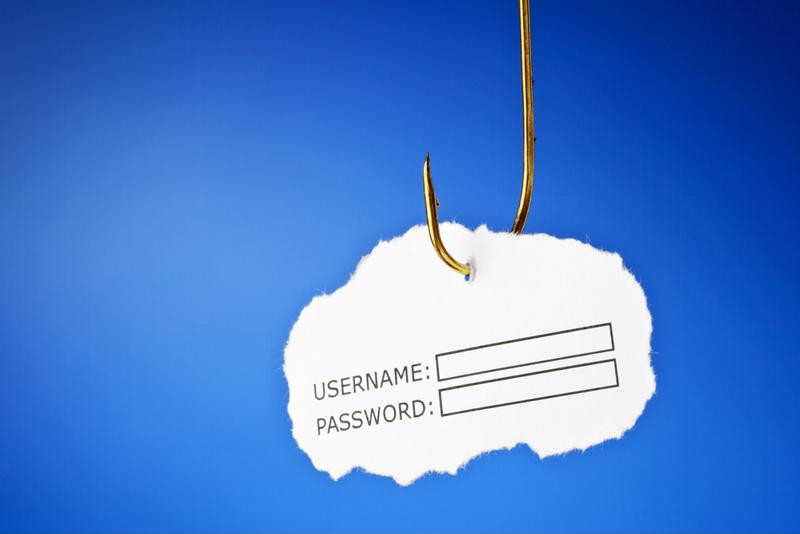
Sometimes, accessing private information is as easy as asking for it.
ISG can help you fix these problems and pass an audit
HIPAA audits are extremely comprehensive, and getting a perfect score is next to impossible. In fact, as the above example shows, health care facilities often have numerous issues that they don’t even know about, which can decrease an organization’s standing if an auditor were to discover these problems.
ISG can help these facilities decrease the number of red flags to a manageable and reasonable number, thereby increasing the chances of passing an inspection. Health care data is extremely private, and ensuring its safety should be a top priority.
The culture you have created at your business should be something you are constantly evaluating. Not only does it affect employee retention and recruiting, it also has major repercussions when attempting to implement a hybrid IT solution. Blending your own IT team’s services with that of an outside provider is never a completely smooth process, but having a poor internal culture can make it even bumpier than it has to be.
That said, culture does not exactly have a quantifiable metric, so deciding whether or not your employees are ready for this kind of service can be difficult. What does an office that is prepared for hybrid IT integration look like, and what can you do to get your workers to that position? Let’s find out:
“IT departments have become overwhelmed.”
Your IT team hasn’t failed
A good place to start with a hybrid IT integration is to make sure everyone understands that your internal IT department is not at fault here. Many employees jump to the conclusion that contracting a managed service provider to handle certain functions is the first step toward fully outsourcing IT. As an administrator, it is your job to quell these notions.
With the massive increase in technological reliance in recent years, IT departments have become overwhelmed. In fact, Robert Half Technology found in a study that CIOs believed their tech teams to be understaffed by about 42 percent. Explaining that this integration of hybrid IT is to allow your internal department to focus on future goals rather than putting out daily fires can help quell any panic from employees.
Emphasize innovation from the top
Another reason employees are hesitant about hybrid IT is the fact that they probably have gotten used to the old way of doing things. In fact, getting employees out of a rut is actually one of the best benefits of this service. Shaking things up from time to time helps fight complacency, but it has to come from the top of your organization. This means getting all executives on board and actively engaged in this transition.
If not, you could become part of the roughly 90 percent of respondents in a recent Hitachi Consulting report that stated legacy systems were getting in the way of innovation and growth. Innovation should be a major part of any company’s business model, and hybrid IT can help you work toward it.
Hybrid IT can help with innovation.
Be specific with what will need to happen
Finally, and perhaps most importantly, administrators need to keep employees as informed as possible about this transition. This starts by being specific about what operations will have to be moved when discussing the integration with your current IT team. Just saying “we need to move to the cloud” is not good enough.
On top of that, you’re going to need to be extremely transparent with the rest of your employees. Backlash from workers is very common in these situations, and the only way to minimize this is to make sure everyone knows what’s going on and why these operations are changing.
Hybrid IT is certainly a deviation from the norm, but that’s the whole point. Change is a good thing if handled correctly, so make sure you choose a solid managed service provider to get the job done right. ISG Technology’s years of experience integrating hybrid IT can help make sure your transition is as pain free as possible.
https://projectrecognition.isgtech.com/wp-content/uploads/2019/04/desktop-paper-laptop-hand.jpg266702ISG Technology/wp-content/uploads/2018/02/isg-logo.pngISG Technology2016-05-10 14:25:292016-05-10 14:25:29How does culture affect hybrid IT integration?
Technology today is all about doing more with less, and nowhere is that more apparent than in the legal industry. This sector’s market in the United States has been valued by the Legal Executive Institute to be worth around $437 billion, and with so much money invested, administrators in this field are doing everything they can to streamline the legal process. But what kind of technologies are law firms adopting?
“The cloud has quite a lot of benefits for those working within law.”
The cloud and e-discovery
Like in every other industry, the cloud has quite a lot of benefits for those working within law. Although this technology has a wide range of uses, perhaps the most relevant for legal firms is its ability to quickly and efficiently implement e-discovery applications.
When legal proceedings begin, lawyers start what is called the discovery process. As the name entails, this is where employees at the law firm comb through hundreds or thousands of documents in order to uncover any wrongdoing and to get to the heart of the matter. This is often an extremely inefficient way to handle discovery, and can very easily result in a worker missing a crucial piece of evidence.
Computers never skip a sentence or fall asleep on the job.
E-discovery applications work to cut through this process by using specific searching algorithms to find what the lawyers are looking for. Computers are infinitely better than humans at searching large amounts of data, which is why many law firms have opted to include this technology in their arsenals. However, when choosing to work with e-discovery applications, these organizations have to make a choice between on-premises computing or accessing this technology through the cloud.
Even though e-discovery is revolutionizing the legal industry, it has also increased the risk of a data breach. These documents are often extremely private and contain personal data that a hacker could later use for personal gain. This need to keep information secret certainly isn’t specific to law, but it’s something that is keeping many firms out of the cloud.
However, as many experts have noted, the cloud really isn’t as unsafe as many believe it to be. In fact, Big Law Business contributors Daniel Garrie and Yoav M. Griver stressed that on-premises computing systems can be hacked just as easily as the cloud. Considering the initial costs associated with setting up an in-house computing solution, avoiding the cloud because of a false sense of danger is a mistake.
Contract management software
Another technology a lot of law firms are seeing the benefits of is contract management software. This is a platform through which administrators can easily view the progress of each contract they have created. Modifications can be made quickly and easily to unsigned contracts, allowing everyone with access to the system the opportunity to read and comment on the exact same document. Lawyers can even view how well signers are following up on their obligations on existing contracts.
That said, perhaps the most interesting part of this technology is its ability to manage digital signatures. One of the biggest issues holding legal firms back from adopting more advanced solutions is the fact that a physical ink signature is seen to hold more weight in court than a digital one. This viewpoint is rapidly changing, however, thanks in part to contract management software.
The bring-your-own-device trend is sweeping just about every industry, whether company administrators know about it or not. In fact, a Gartner study found that around 37 percent of people currently using their own gadget for work purposes don’t currently have permission. Considering how people often don’t protect their mobile devices, this is an absolute nightmare for the IT department.
In fact, quite a lot of organizations have had to deal with hackers due to the increased use of personal gadgets for work purposes. A study conducted by IDG Research Services discovered that just under three-quarters of respondents saw a data breach event as a result of poor cybersecurity measures concerning mobile devices.
That said, BYOD has some amazing benefits for legal firms. Lawyers often meet with clients outside of the office, and carrying around important documents is cumbersome and can result in lost or stolen client information. What’s more, other staffers who aren’t lawyers are seeing similar advantages. While this is good in terms of flexibility and mobility of the workers, it’s also putting a major strain on the IT team. Employees should be able to use their own devices to access company data, but only after having implementing certain safety guidelines.
This is why any organization wishing to ensure the security of company records should contact an ISG Technology BYOD specialist. Our experts have years of experience with this trend, and we know what it takes to keep a law firm’s data safe.
https://projectrecognition.isgtech.com/wp-content/uploads/2019/04/mobile-devices.jpg266702ISG Technology/wp-content/uploads/2018/02/isg-logo.pngISG Technology2016-05-09 10:51:372016-05-09 10:51:37Tech in law
The global colocation market will see a compound annual growth rate of 12.4 percent through 2020, so if you are doing your research on colocation providers, you’re in good company. For a growing number of businesses, colocation provides a lot of benefits:
Easy upgrade from an on-site “server room” into a professional data center
Reduced initial and ongoing expense to build, power, cool and backup an on-site data center
Support from professionals in managing maintenance and upgrades
Backup of critical data for disaster recovery efforts
Learn how to make a business case for colocation. Get info on how to select a colocation provider, including questions to ask for businesses subject to compliance regulations. ISG is SSAE 16 Type 2 SOC 2 audited for security, availability, privacy, processing and performance.
https://projectrecognition.isgtech.com/wp-content/uploads/2019/04/gears-clock.jpg266702ISG Technology/wp-content/uploads/2018/02/isg-logo.pngISG Technology2016-04-27 19:15:032016-04-27 19:15:03White Paper: 4 Factors To Consider With Colocation
We see hyper-convergence as a new IT infrastructure model that leverages the power of software-defined technology to tightly integrate end-to-end compute, network, storage, and management resources. The result is quicker deployment, faster response to business demands, simplified administration, and reduced operating costs. See how you can:
Done right, IT can ensure a strong return on investment and have a proven positive impact on Education Success Measures (ESM). This free report will teach you the common pitfalls to avoid, along with best practices for network implementation, including:
5 benefits of converged technology
A sample strategic IT hierarchy for planning
2 critical factors for successful Wi-Fi upgrade
Wi-Fi purchasing tips
Keys to successful video surveillance and access control systems
3 security benefits of IT as a Service
https://projectrecognition.isgtech.com/wp-content/uploads/2019/04/abstract-art-data.jpg266702ISG Technology/wp-content/uploads/2018/02/isg-logo.pngISG Technology2016-04-27 18:49:222016-04-27 18:49:22White Paper: Best Practices For K-12 Tech

 Colocation continues to evolve every year as needs for storing mission critical information change. For many companies, balancing profitability of IT with constant repairs, downtime, and continuously improving security has become overwhelming. As such, colocation is in demand, simply because it makes good business sense.
 The hackers could have made so much more money if they’d checked their spelling.
 Sometimes, accessing private information is as easy as asking for it.
 Hybrid IT can help with innovation.
 Computers never skip a sentence or fall asleep on the job.

 Done right, IT can ensure a strong return on investment and have a proven positive impact on Education Success Measures (ESM). This free report will teach you the common pitfalls to avoid, along with best practices for network implementation, including: