
3 reasons why your business should consider colocation

Technology has grown by leaps and bounds over the last few years. It seems like new innovations are coming out every day, each with more benefits than the last. One of these incredible jumps forward has been colocation. Basically, this is where companies bring their own servers to an outside data center and share space – or colocate – with other companies.

Colocation has revolutionized enterprise IT, as many organizations have jumped into this innovation with both feet. In fact, the market surrounding this feat of modern technology is expected to absolutely explode in the years to come. According to 451 Research, the global data center colocation market is projected to be worth around $36 billion by 2017. That’s a huge amount of money for a single service, and simply goes to show how popular this innovation has become in recent years.

So, to bring more exposure to this incredible advancement, we’d like to take some time and discuss the top three reasons why your business should consider colocation.

Colocation is an interesting innovation with many benefits. Colocation is doing a lot for enterprise IT.

1. Affordability

The first – and perhaps most important – benefit of colocation is the cost savings that it can provide to organizations. Servers are absolutely necessary for modern business operations, but their care is incredibly expensive. The electricity used to power them alone is a huge expenditure, not to mention the fact that you need to hire employees to make sure the machines are safe and well maintained.

This is probably the biggest reason why so many companies are opting to switch to colocation services for their computing needs. Although you’ll still have to provide your own servers, sharing space in a single data center means sharing electricity costs. That’s good news for the environment, and it’s also a great way to slim down that budget.

What’s more, colocation providers have highly trained staff on duty 24/7 making sure your machines are kept safe and sound. This frees up your own IT team to work on internal goals and projects, rather than simply paying them to maintain the servers. In a way, you’re paying less money to get more done.

“Average network downtime costs around $5,600 every minute.”

2. Reliability

While saving money is always a good thing, businesses need more than that. Companies need to know that their services will be provided at all times, as the loss of these capabilities can be extremely expensive.

According to Gartner, the average network downtime costs around $5,600 every minute. This makes a lot of sense, considering the importance of connectivity in the Internet age, although that amount of money being lost every minute should be extremely frightening to the average business owner.

This fear of downtime is driving a lot of company leaders into colocation services, and for good reason. Colocation service providers often also offer disaster recovery planning. This means that these companies will be much more prepared than your organization at dealing with a disastrous situation, therefore ensuring the uptime of your mission-critical services better than your company ever could on its own in its own facility.

3. Scalability

Sure, your company may only need a single server right now, but don’t you think that will change as your business grows? The whole point of the American Dream is to start small and eventually work your way up to massive success, but is your company prepared for that?

Scaling up on your own can be incredibly frustrating, as finding the space for new servers is not easy. Your company’s office probably has a finite amount of space, and while growth means more computing needs, it also means more employees. How will you find space for your servers if you have more workers than ever? Once again, this is is where colocation comes in to help save the day.

One of the best parts of colocation services is the fact that you can scale your company’s operations up or down to your heart’s content. Taken on a lot of new business and can’t handle the workload? Just rent more space. Had a bad year and don’t need as much server space? Scale down. Colocation services are almost entirely customizable, allowing your computing operations to grow or shrink with your business.

Colocation really is an incredible innovation. It allows your company to receive the server power it needs, without forcing you to buy space you don’t. If you would like to see what colocation can do for you and your business, contact ISG Technology today. Our years of experience in the field will allow you to leverage this amazing technology to benefit your company.

BYOD in schools: Advantages and disadvantages

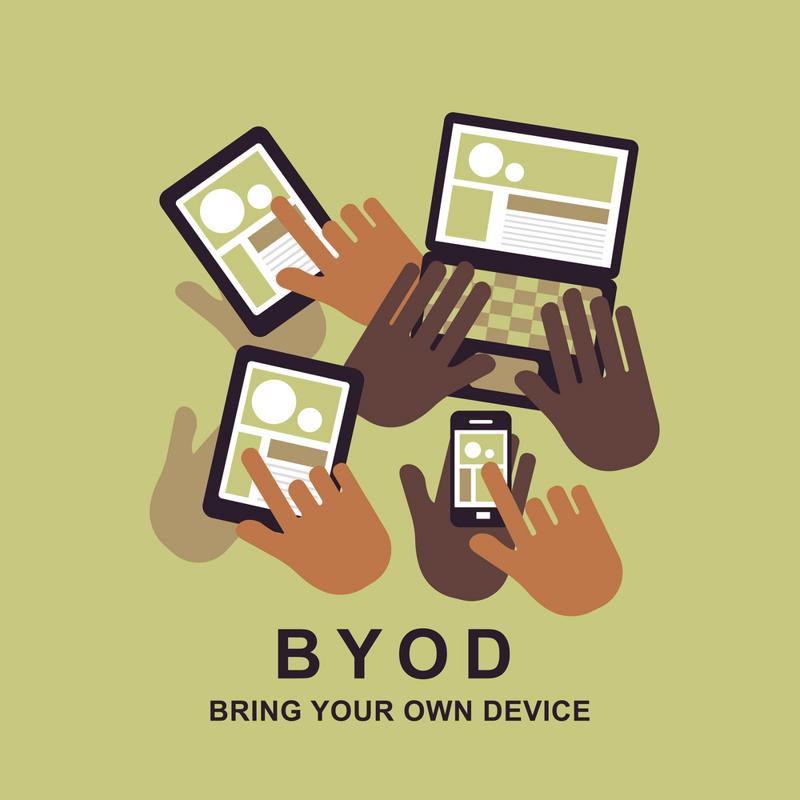
As highly advanced technology becomes more affordable, people are beginning to rely more on their own devices within the workplace. Using a smartphone or personal laptop for work purposes – a movement that’s been coined bring your own device – has been catching quite a lot of traction lately within the corporate world.

However, this trend isn’t just for businesses. Many people have suggested letting students utilize their own devices within the classroom as well. While this idea certainly has some good aspects to it, it also has some downsides. Here, we’d like to take some time here to discuss both so educators can have a fuller view of what a BYOD classroom would look like.

“The world is very quickly moving to a digital space.”

Advantages

Lower initial costs for schools
This is usually the first point of interest people like to focus on when discussing BYOD. The world is very quickly becoming ever more digital; as such, organizations need specific hardware in order to connect in an efficient and effective manner. This is just as true within schools as it is in the business world, as educators must make sure the next generation is prepared for the technologically advanced society that awaits them.

Gone are the days of classes in cursive, as they have given way to typing and coding courses. As such, many schools are struggling to stay current with the technology contained within their facility. With budgets being as tight as ever in most education environments, it makes a lot of sense to just let the kids bring their own devices.

The Pew Research Center stated that 58 percent of American teens had a tablet, while 73 percent of them personally owned a smartphone. These students could very easily bring their devices into the classroom, thereby increasing the number of usable machines while still keeping budgets low.

Students get to learn with familiar tech
A huge part of the educational process is connecting new knowledge with the old. It’s why students who are just learning how to write are asked to talk about their summer vacations and what they want for their birthday. It makes the process personal, and it is yet another big advantage to BYOD in schools.

When students use their own devices in school, they skip over that awkward part of class where they have to learn how to use the tech first before actually getting to the lesson. This not only wastes time, but it causes confusion that often is disruptive to the learning process. BYOD would allow teachers more time to discuss the actual lesson plan, while also increasing the receptiveness of the students.

BYOD promotes receptiveness in students. Students can learn more if they use their own devices.
Disadvantages

Disparaging to lower-income students
While BYOD is great for schools in more affluent areas, many regions of the country simply are not ready for it. Poorer students won’t have ready access to these devices, and forcing them to buy technology they can’t afford in the first place just to participate in the classroom simply isn’t an option.

While lower-income areas absolutely need technology-based learning within the classroom, doing so with a BYOD policy won’t work. Schools that work in these kinds of regions need to be aware of the financial situation of its student body and should therefore avoid implementing BYOD.

Can students be trusted with cybersecurity?
Poverty might be one of the most obvious of detractors from a BYOD policy, but the most poignant reason this trend might not work for your school is that teens are not exactly the most reliable in terms of policing their online habits. It’s not their fault, rather some teens simply don’t know how to avoid certain scams while using the Internet.

“16 million mobile devices suffered a malware attack in 2014.”

That being said, security is something to consider when thinking about a BYOD policy for your school. Motive Security Labs discovered that around 16 million mobile devices suffered a malware attack in 2014. Hackers are working constantly to access information stored on mobile tech, and allowing your students to use these devices for classwork could open your school up to a host of cyberattacks

Basically, school administrators need to come up with a system for making sure students don’t invite cybercriminals into their network. This could be the banning of certain high-risk websites, or even only allowing devices within the school to connect to a specific number of safe sites. Either way, it would be a mistake to allow students to govern themselves within a BYOD policy.

The verdict

When it comes to BYOD in schools, it really all depends on the facility itself and the people working within it. Enacting this kind of policy in a school is a lot easier said than done. There are a lot of variables to consider, and missing one tiny detail could result in a massive cyberattack that could cause a lot of damage to your facility’s reputation. That being said, there are also a lot of benefits to letting kids use their own devices. The monetary advantages are obvious, and teens are a lot more receptive to a lesson if they’re allowed to complete it using their own tech.

At the end of the day, it all just depends on what kind of school you run. If you have the time to police online activity and have a student body with a lot of personal devices, BYOD can do quite a lot for your school. If not, this trend might not be right for you and your students. BYOD is a fantastic move in the right direction for many corporate institutions, but implementing it within the educational space is going to take some time.

If you do plan on enacting a BYOD policy, you’re going to need some help. The cybersecurity aspect of this trend especially calls for professional experience, as your school’s private data is incredibly sensitive. Thankfully, ISG Technology can help you work out the kinks of a new BYOD policy. With years of experience helping people integrate BYOD into the workplace, ISG Technology can help bring your classrooms into the 21st century.

The ins and outs of mobile tech: What does it mean for you?

If you ask tech-industry experts what they think has been the most disruptive technology of the last couple of years, you’ll get a few different answers. Some will say cloud computing, and others will say virtual infrastructure. Quite a few, however, will simply say one word: mobile. Smartphones, tablets, smartwatches and the Internet of Things are all examples of mobile technologies that have changed the way enterprises, medium-sized companies and small outfits alike operate within the business world. Recent numbers from The Pew Research Center indicated that 68 percent of American adults own a smartphone, and that statistic is only going to increase as 2016 progresses. It seems that everything we do is now tied up in mobile or has a mobile component – including everything in the business world.

Why is mobile so important to the way we do business now? Let’s take a look at how this disruptive technology has had such an irreversible influence on how companies approach their IT infrastructure:

1. Business and consumer tools

Computing on the go has never been more important for our fast-paced society. Research is being done every day exploring the efficacy of these kinds of tools for consumers and companies alike. For instance, according to a new study from research firm Sequence, consumers are using their devices to make wish lists and spend time with family this holiday season. If given the chance, the study found, one-third of them would use the time saved by mobile shopping to stay in bed longer.

This is a fun example of how mobile tech has changed the way we look at things, but enterprises and SMBs are also benefiting more from devices like laptops and smartphones. Business can be conducted on the fly thanks to these kinds of devices – leading to an increase in productivity and improved outcomes throughout the business world. Bring-your-own-device policies are helping companies save money in overhead and operational expenses while at the same time giving employees the means to be more productive and more efficient.

Myriad kinds of mobile devices can be used to impact office productivity.Myriad kinds of mobile devices can be used to impact office productivity.

2. Security

As mobile devices have evolved to meet the growing needs of enterprises in every industry, so too has the technological landscape developed in order to accommodate their increasing use. BYOD is even one of the driving forces behind the endpoint security market, according to a recent report published by MarketsandMarkets. The endpoint security market is projected to be worth $17.4 billion by 2020, growing at a compound annual rate of 8.4 percent over the next five years.

This market is growing proportionately with the number of malware samples discovered every day by security teams around the world. Motive Security Labs found that 16 million mobile devices were targeted by malware in 2014. To negate these kinds of threats, it’s crucial for companies to make – and stick to – a BYOD security strategy.

This strengthening of the security space is a clear indication that the need to mitigate risks has been compounded by the introduction of mobile technologies into the workplace. When unknown employee devices are connected to the network, it can sometimes cause headaches for the IT department in the form of shadow IT. Networks sometimes aren’t prepared for the intrusion of different kinds of tech, which means there may be hidden vulnerabilities waiting to be exploited.

“Improvements in terms of productivity, efficiency and expense-cutting are well worth the risks.”

3. The good parts about shadow IT

However risky it may be to allow mobile tech on your network, the benefits can outweigh the disadvantages if you play your cards right. Shadow IT has gotten a bad rap (understandably) in recent years, but improvements in terms of productivity, efficiency and expense-cutting are well worth the risks. In addition, according to CMS Wire contributor Joanna Schloss, shadow IT can lead to the adoption of new technologies that work hand-in-hand with mobile tech. This in turn helps companies see better return on investment from these tools.

Navigating the ever-changing mobile tech landscape can seem daunting when you undertake this task by yourself. Partnering with a managed services provider like ISG Technology gives you access to trained professionals who know what they’re talking about when it comes to new devices and how to best use them to your advantage. We can also help you determine the best course of action in terms of increasing your security protocols and taking charge of your computing infrastructure.

Contact the experts at ISG Technology today for more information!

3 things the boardroom needs to know about disaster recovery

Keeping a business running takes a lot of hard work and effort from the boardroom. A modern company of any size has quite a lot going on, and executives are constantly busy with tasks that keep the money flowing. This generally means delegating work that isn’t of an immediate concern to other departments. A lot of the time, creating and developing a disaster recovery plan falls into the category of work that gets pushed to the IT department.

While your IT employees certainly know more than the boardroom about the operations of your technological equipment and data systems, that doesn’t mean you should avoid taking an active role in disaster recovery. A solid plan in the event of a catastrophe is vital to any company’s continued success, and as such there are a few things every executive needs to know about disaster recovery.

“Disaster is coming to your business.”

1. Data loss and downtime are an eventuality

When discussing disaster recovery in the boardroom, it’s important to realize that it isn’t a conversation about if you’ll need a plan, but when you’ll need to implement one. Talking about an event that disrupts your company’s ability to conduct business is uncomfortable to say the least, but pushing this discussion to the side as a mere possibility is unproductive and seriously dangerous. Whether you want to think about it or not, disaster is coming to your business. The question is whether or not you’re ready for it.

The 2014 EMC Global Data Protection Index supports the eventuality of downtime in the modern workplace. This survey of 3,300 IT decision-makers, which was conducted for EMC by Vanson Bourne, found that 64 percent of respondents had encountered a data loss event in the previous year. This alarmingly high number simply goes to show how important a serious discussion is about creating a disaster recovery solution. Bad things can happen anywhere at any time to anyone, and acting like you’re above these kinds of events will only make your company fall harder.

2. Outside forces are the least of your worries

When you think about the word “disaster,” what’s the first thing that pops into your head? Maybe it’s a tornado ripping through your company’s headquarters, or maybe it’s more subtle like flood waters seeping into your basement and destroying your electrical equipment. Well, when it comes to disasters that result in data loss, these events can’t hold a candle to what your employees can do.

Tornados aren't the only disaster you have to worry about. The worst disasters are a lot more discreet than a tornado.

According to the 2015 Data Health Check study conducted by Databarracks, the leading cause of data loss is human error. The report found that 24 percent of all data loss events studied had roots in people making some kind of mistake. Of course, this doesn’t mean you should stop trusting your staff. Your employees are the backbone of your business, working day in and day out to make the company successful.

That being said, no one’s perfect. People make mistakes, and sometimes these missteps end up costing the company big time. Your employees are in constant contact with company data, which means they are the biggest risk factor when it comes to data loss. This is why it’s absolutely vital for the boardroom to take an active role in disaster recovery implementation. While each worker is a vital cog in the machine in your company, they’re also a liability, and this risk needs to be mitigated with a solid disaster recovery solution.

“Your staff simply doesn’t know enough about disaster recovery.”

3. It’s cheaper to outsource

With the number of resources offered by the Internet, a lot of people are opting to work on something themselves rather than hire someone to do it. While this is fine when it comes to a new porch or changing your oil, developing a disaster recovery plan in-house simply isn’t a good idea. To begin, your staff simply doesn’t know enough about disaster recovery to implement an effective plan. Your IT employees obviously know more about your data systems than anyone else, but creating a plan that mitigates risk in the event of a data loss event may not be in their wheelhouse.

While this should be enough to convince you to outsource a disaster recovery solution, recent data from Computer Economics has found that doing so is actually cheaper than creating a plan in-house. The IT Outsourcing Statistics 2015/2016 found that 92 percent of IT organizations surveyed found that they spent the same amount of money or less outsourcing their disaster recovery plan than when they created one on-site.

This means that by creating a disaster recovery plan with your own employees, not only are you getting a less effective solution, but you’re also paying as much or more than if you’d gone to a disaster recovery expert. Obviously, your IT department is going to play a vital role in the creation of a plan in the event of a disaster. However, your company would be better served if these employees spent their time working on internal IT goals rather than developing the plan all by themselves.

Executives have a lot on their plates when it comes to keeping a company operational. That being said, the boardroom needs to take a more active role in promoting a solid disaster recovery plan for their business. Companies without a solid plan are a ticking time bomb, and if your enterprise doesn’t have a disaster recovery solution, now is the time to act. Thankfully, ISG Technology is here to help. Take a look at our Disaster Recovery and Business Continuity page and see why ISG Technology is a leader in disaster recovery solution development.

Top 5 benefits of optimizing your IT infrastructure

Maintaining computing infrastructure is one of the most important parts of owning and operating a company. Without technology, organizations wouldn’t be as productive and wouldn’t be able to conduct business in the same way – so in order to utilize your IT infrastructure to its fullest potential, you have to make sure it’s optimized and ready for whatever you throw at it.

Let’s take a look at some of the best benefits of prioritizing your IT portfolio and giving your organization the best tools possible:

1. Provide better client service

Investing in technology solutions that will help your company provide better service and create better products should always be at the top of any “to-do” list for the IT department. Incorporating tools like client relations management software and enterprise resource planning into your cloud environments can offer your company a chance at higher revenue and better client engagement, according to Demand Media’s Alexis Writing. Your IT infrastructure needs to be at peak performance if you’re going to get everything you can out of your CRM solutions.

“Businesses need to maintain clear visibility into their entire IT environments.”

2. Boost agility

Virtualized and cloud infrastructure tools both offer benefits that would allow a business to practice better data management and, in the long run, more effectively and efficiently meet client needs. Together, they add complexity to your computing environment, which can sometimes equal slowdowns. According to eWeek contributor Chris Preimesberger, businesses need to maintain clear visibility into their entire environments if optimization is to occur – meaning it’s crucial for the IT infrastructure to be as transparent as possible. When IT managers can have a holistic view of their computing equipment, it becomes easier to practice business agility.

3. Increase productivity

Making sure your technology solutions are all on the same page also contributes to hefty increases in productivity. There are several kinds of solutions tailored to this kind of function, and one of them would be unified communications technology. UC incorporates multiple forms of communications – unified messaging, email, phone, etc. – into one solution, making it easier to disseminate information across an entire organization.

Recent projections from the researchers at MarketsandMarkets indicated that the unified-communications-as-a-service market will be worth a total of $24.88 billion by 2020, demonstrating the clear demand for these types of solutions. Implementing UC across your company not only helps you stay abreast of what’s going on – it can also boost productivity across the board as employees have the ability to work from home or on the go.

4. Get more out of your servers

When it comes to physical infrastructure within the data center, making sure it works for you is crucial. That includes giving your servers a tuneup every once in a while and investing in data center technologies like cooling and monitoring solutions that keep an eye on your equipment so you don’t have to.

Part of optimizing server functionalities also includes investing time and money to make sure you’re energy efficient. A recent Anthesis Group study found that nearly 30 percent of servers worldwide are comatose – in other words, they are sitting in data centers around the globe, sucking up energy but not doing any real computing. Taking those servers and consolidating them in order to get more out of virtualization and the cloud is one way to optimize and strategize in the IT department, according to Data Center Knowledge. When less energy is taken up by servers, your business can be more efficient and save money in the long run.

Consolidating servers can lead to energy efficiency and distinct cost savings.Consolidating servers can lead to energy efficiency and distinct cost savings.

5. Strengthen networks

Investing in networking solutions can increase the functionality of your data center and enhance computing power – an important step to take when you want to more quickly complete tasks and balance workloads. TechTarget noted that network function virtualization, for instance, has the ability to decrease the amount of necessary network hardware and thus decrease complexity across the board. This contributes to improved business processes and, eventually, better bottom lines.

When it comes to investing in and maintaining an efficient, effective computing portfolio, it helps to have a team of experts on hand. Contact the managed services professionals at ISG Technology today for more information about how having an optimized IT infrastructure can improve your business functions and make sure you’re keeping up with – and exceeding – the competition.

Enterprise cloud computing vs. virtualization: When should you invest?

As companies grow, their technology needs expand with them. Decision-makers have their work cut out when it’s time to choose new IT solutions, and where and how to store your data is one of the biggest considerations an IT executive must make.

Consolidating servers using virtualization technology and migrating data and applications to the cloud are both options for companies to take advantage of as they increase their computing power and need to improve functionality. But, how do you know which option is the correct one for your specific business needs?

Managing your own virtualized infrastructure

Server virtualization has been touted for its usefulness in consolidating IT environments and making computing portfolios easier to manage. According to a study published by TechNavio in October 2014, the market for server virtualization and related services was projected to grow at a compound annual rate of around 28.1 percent over the forecast period from 2014 to 2018, indicating a clear demand for these kinds of capabilities.

When should you consider server virtualization? In the data center environment, consolidating servers into fewer pieces of physical equipment elicits a number of benefits. TechRepublic named reduced hardware cost, fewer hot spots and streamlined data backups as top advantages of deploying virtual machines in the data center. When you’re managing your own VMs, you also have the distinct benefit of not being locked in to a specific vendor, which is one potential issue with the cloud.

Virtualizing your IT infrastructure can be an important way to consolidate servers and cut costs.Virtualizing your IT infrastructure can be an important way to consolidate servers and cut costs.

When should you outsource to the cloud?

TechTarget noted that enterprise cloud computing can help companies lower operational expenses and further enhance collaboration with business partners. Indeed, Verizon’s recent 2016 State of the Market: Enterprise Cloud report found that 88 percent of IT executives surveyed said the cloud improves responsiveness to business needs, and 65 percent of respondents said it gives a boost to operations in general.

“The cloud improves responsiveness to business needs.”

Cloud storage services negate the need for you to operate your own server room to house all of your company’s data. By outsourcing this function to a cloud provider, it potentially frees up your IT team for other important tasks and can thus enhance the level of productivity in your tech department.

No matter which computing solution you choose, you should consult IT professionals before deploying your environments. Contact the cloud and virtualization experts at ISG Technology for more information about how we can pair you with the correct cloud solution for your specific business needs.

Virtualization: The time is now

Keeping up with the latest and greatest of technological advancements can be really hard to do, especially when you’re running a business. There are simply too many other things to worry about before upgrading, particularly if the old infrastructure is still getting the job done.

That being said, relying on older technology because it hasn’t broken down yet is an extremely inefficient way to run a business. This is especially true when talking about server virtualization. There are so many benefits to upgrading to a virtualized environment that we took some time to write up a list of why you should consider virtualization right now:

1. Reduce your ecological footprint

Everybody working in technology can attest to how much energy is consumed by IT systems every year. Time writer Bryan Walsh stated that in 2013, the “information-communications-technologies ecosystem” took up about 10 percent of the entire world’s electricity generation. He even went on to state that the world uses 50 percent more energy to move data around than it does keeping planes in the sky.

More energy is used to move data then to keep planes airborne. Entirely too much energy is used within IT and virtualization can help.

This massive amount of energy used simply for upkeep of physical systems shows the massive ecological impact server virtualization offers the world. Server virtualization takes multiple physical machines and brings them to the digital space, storing them all on a single piece of hardware.

This means we can get the processing power of multiple servers while only using valuable resources to power one of them. From purely an environmental standpoint, server virtualization just makes sense.

2. Reduce your costs

While you are most likely more than happy to reduce your company’s intake of natural resources, you’re probably more concerned about what server virtualization can bring to your company in a more financial space. This is yet another area where virtualized machines dominate their physical counterparts.

Having some sort of virtualized environment is going to seriously cut your company’s electric bill. Server virtualization is where you’ll see the majority of these benefits. A lot of server processing power goes unused when the machine is only running a single environment. By combining multiple servers on a shared physical platform, less overall energy is used. This accounts for a huge amount of savings.

Server virtualization can also bring about some great savings in terms of hardware costs. When you virtualize assets, the machines running your operations may be owned and operated by a managed service provider at its specific data center. These facilities are state-of-the-art, which means you’ll be able to benefit from the best hardware money can buy without actually purchasing it yourself.

Finally, but perhaps most importantly, virtualization can substantially cut the costs and complexity of a disaster recovery solution. The time it takes to recover after a disastrous event is severely reduced when operating in a virtualized environment. This has a lot to do with the fact that you won’t have to rebuild servers or applications after a disaster with server virtualization. The shorter recovery time will allow you to meet RTO/RPO goals at a fraction of the cost of a physical server.

“IT workers are generally spread pretty thin in the modern workplace.”

3. You get to focus on internal IT goals

For your IT department, this is going to be an absolutely life-changing benefit if and when you decide to embrace virtualization. IT workers are generally spread pretty thin in the modern workplace. Conducting business in this age means having the technology and systems to do so, and making sure those systems are running is a huge time sink.

A survey conducted by Forrester Research of IT professionals from more than 3,700 companies found that the IT department is constantly putting out fires, with an average of 72 percent of the budget being used for “keep-the-lights-on” functions. By utilizing server virtualization, you can push many of these problems off onto your MSP. While your virtualization provider works out the problems your server is having, your IT department can get back to focusing on internal IT goals. You get the experience of an MSP’s employees in terms of hardware maintenance and repair while also utilizing your own workers to build your business. It’s the purest definition of a win-win scenario.

If you’d like to see what else server virtualization can do for you, or if you’d like to learn more about this amazing technology, make sure to check out ISG Technology’s virtualization page.

ISG Technology's parent company Twin Valley deploys gigabit speed

A new article published by Broadband Communities Magazine recently shed some light on the hard work of ISG Technology’s parent company, Twin Valley. This telecommunications provider is unique, not only because of its constant need for innovation in servicing the community, but also because it’s been a family-owned establishment since 1947 and has grown to service 6,000 clients over 2,400 square miles.

Although finding a good old-fashioned family business in today’s corporate world is newsworthy enough, this isn’t the focus of Masha Zager’s article. Rather, Zager took a look at the amazing gigabit service that Twin Valley is providing to more than 2,000 businesses and residential homes in Clay Center.

Twin Valley: Always one step ahead

Considering the family business had the foresight to invest in data center and cloud storage services in ISG Technology in 2011, it’s clear Twin Valley has always seen the value of keeping one eye on the horizon. After reviewing the needs of their many clients, Twin Valley administrators decided that a gigabit Internet service was a good direction to head in. This service, which Twin Valley has named Pulse Internet, would provide speeds that were unheard of in the region.

Twin Valley has always wanted to be a leader of technological innovation.Twin Valley has always wanted to be a leader of technological innovation.

Other companies may have had trouble setting up such a feat, but Twin Valley has consistently seen the value of looking ahead. The fiber infrastructure that the business had implemented in 2008 was future-proof, meaning it could leverage this toward its gigabit service.

Clients couldn’t be happier

Zager’s article also focused in on the client side of this equation. Many times, when a company implements a new and innovative service, clients need a little time to adjust. Clay Center residents obviously didn’t need this time, as those provided with Pulse seemed overjoyed by it.

However, there’s something to be said about providing these managed services to smaller, tight-knit communities. Providing technological services like Pulse allows smaller communities to show their worth in the marketplace.Lori Huber, director of the Clay County Economic Development Group, noted that Pulse Internet is a “game changer” in terms of its Internet speeds. She also remarked that such innovation was going to push “economic growth opportunities,” which is something a community of any size can get behind.

Even President Obama agrees with this statement. While visiting Cedar Falls, Iowa, to view the city’s fiber-fed gigabit infrastructure, Obama stated: “You don’t have to be the biggest community to do really big things; you just have to have some vision, and you have to work together.”

Twin Valley’s perceptiveness towards technological innovation in the area of gigabit Internet obviously shows vision, but Scott Leitzel, vice president of operations and a board member on the Economic Development Group for Clay Center, also wanted to stress the company’s commitment toward working with the community.

“We’re privileged to empower our clients to do whatever they want to do – whether that’s to connect all their devices or run businesses out of their homes – all at an affordable rate,” he said.


Join the ISG Technology Team


Hybrid IT: The basics

Massive innovations in technology are rapidly shifting the current business landscape. Products and services that were once seen as unnecessary luxuries are now quickly becoming vital to a company’s operation. The cloud can most definitely be counted within these services, especially in the world of IT.

We’ve previously discussed the wonders of the hybrid cloud and managed services and what they can bring to your business, but the cloud is so much more than infrastructure. IT resources can leverage a hybrid cloud set up in order to receive similar benefits in what industry experts are calling hybrid IT.

“By 2020, 78 % of businesses will have integrated cloud computing.”

Bringing the benefits of hybrid cloud to IT resources

The cloud is a huge part of modern business, and it’s not going anywhere anytime soon. Forbes contributor Louis Columbus stated that by 2020, 78 percent of businesses will have integrated cloud computing into their current business model. That’s a huge jump from the 37 percent that have adopted cloud managed services today, and this massive increase just goes to show the high demand cloud services have in the business world.

So, with this predicted success of the overall market in mind, the question still remains: What is hybrid IT?

To understand the answer to this question, the demands of IT organizations must first be fleshed out. These companies have set up their business model around the fact that their clients require IT resources such as the development and testing of mission-critical applications.

As the technology developed, cloud storage services began to be more economical and efficient than internal deployment on the part of the client. And so, cloud-based IT managed services was born.

However, there was a problem with this that needed to be fixed. Many IT organizations leveraged public cloud infrastructure in order to meet the needs of their clients. This works just fine for applications and data that are business-critical. That being said, problems began to arise when sensitive information needed to be hosted on the cloud.

As we discussed in our earlier article on public and private clouds, the public cloud has some security concerns. Due to the fact that you’re sharing a public cloud infrastructure with other clients, the data contained on these clouds simply isn’t as safe as those within an on-site, private cloud. On the flip side of this, private cloud infrastructures are very safe, but they’re also a lot more expensive to set up and implement.

Utilizing hybrid cloud managed services is the answer

So what do you do when you need the security of the private cloud but don’t want to pay for the entirety of your IT resources to be implemented on one? You have your cake and eat it too, of course.

Hybrid IT allows for security and cost effectiveness. Have your public cloud and secure your applications, too!

As managing vice president of Gartner Chris Howard said on the subject, “The cloud will simply become one of the ways that we ‘do’ computing, and workloads will move around in hybrid internal/external IT environments.” Basically, IT organizations are beginning to see that certain client applications simply can’t be hosted on the public cloud and have decided to implement a hybrid cloud solution.

The hybrid cloud combines the security of mission-critical IT applications in a private cloud infrastructure with the cost-effectiveness of a public cloud for data that isn’t business-critical. Hybrid IT is a revolutionary new concept and it’s sweeping enterprise IT right now, as providers like ISG Technology help IT organizations implement these solutions.

Next time, we’ll discuss the use cases of hybrid IT as well as its applications that span multiple industries and business models.

Cloud types and their business applications: Hybrid clouds

As we discussed in our previous article on the subject, there are multiple options to choose from when looking into cloud-based managed services. Public and private are the two opposing clouds, and each have their own advantages and disadvantages. However, due to massive advancements in cloud technology, companies don’t have to actually choose between these two.

These services can be combined into something called the hybrid cloud. This is a model that is rapidly growing, with MarketsandMarkets predicting the market to be worth $84.67 billion by 2019.

Hybrid cloud is the future

Although hybrid cloud data storage is a combination of the public and private cloud, it’s important to note that these are two completely separate services. They can talk to each other via an encrypted network. However, they aren’t a singular product. Rather, the hybrid cloud combines the advantages of the two while also tossing out many of the disadvantages.

Say you’re the owner of a medium-sized business. You have data storage needs and are looking into cloud storage services. You’ve got a lot of data that isn’t very sensitive that needs storing, but you also have very important information you’d like to keep private. Compounding this further, imagine that your business is in an industry with very strict compliance standards.

These stringent requirements, coupled with the fact that you need heightened security for your sensitive data might point you toward a private cloud data storage package. You wouldn’t exactly be wrong in doing so, but you’d certainly be throwing money away storing data that doesn’t have the security requirements of the information that must meet compliance guidelines.

This is where the hybrid cloud comes in. You could leverage a public cloud data storage option, allowing you to cut costs, along with a private cloud plan that would allow you to keep your important information close to the chest. In effect, you’re combining what you need from the private cloud without having to pay the full price of it.

The hybrid cloud can help you save money. Don’t go through budgetary headaches. Get a hybrid cloud storage solution!

As a bonus, the hybrid cloud would allow you to keep your private cloud infrastructure on-site. Not only is this a great option for things like disaster recovery, it makes sure that your information is getting the security it needs. And with one 2015 study finding that the average cost of a data breach is roughly $3.8 million, security should always be a high priority for your sensitive data.

ISG Technology can help you implement a hybrid cloud option

Obviously, setting up this network is no small task. You’re going to need a managed service provider with years of experience in implementing a hybrid cloud data storage solution. Thankfully, ISG Technology has all the expertise necessary to help you take advantage of this amazing technology.

If cloud storage services interest you, or if you’d like to learn more about how the hybrid cloud can benefit your business, make sure to check out ISG Technology’s cloud services page.