
Data lost is money lost

When people think of Google, they tend to imagine the search engine giant as an indestructible force in the technical world. It would seem that Google is such a big player that it can handle any and all obstacles thrown in its way. Google's recent foray into literally any part of the technology industry it sees fit to invest in shows the scale at which the company operates. And while Google's data is probably more secure than the average company from hacking attempts, one force it simply can't match is that of Mother Nature.

Nature's power over man was proven recently when one of Google's Belgian data centers was struck by lightening four times. Although a vast majority of data survived (well over 99 percent, in fact) the point still remains that there are some problems that even the biggest of companies simply can't avoid. If Google's data storage is at risk, how can any other company even hope to protect itself from every single threat imaginable?

The real cost of data loss: Downtime
As any company that has lost data can attest, one of the most frustrating parts about losing data is the amount of time and money it takes to get the company up and running again. In order to find out just how much money data loss and downtime costs companies, EMC Corporation spoke to 3,300 IT professions from 24 countries in 2014. A SecurityWeek article about the study reported that organizations of more than 250 people lost some $1.7 trillion due to downtime and data loss in 2014 alone.

That's quite a lot of money to be lost and only speaks to the sheer, unimaginable magnitude of the problem that is data loss. To compound this, the massive amount of lost revenue felt by companies due to this problem is only made worse considering the study's finding that 64 percent of surveyed enterprises ran into downtime or data loss in the past year.

This kind of data should be a rude awakening to companies that think they are above the threat of data loss. No one is completely safe from data loss, and the only way a company can truly protects itself is to back up its data as much as possible. A robust online backup service, such as what is offered by ISG Technology, is peace of mind in a world where industry heavy-hitters like Google can lose data in a freak accident.  

Growing number of IoT devices calls for enhanced data storage solutions

When the Internet started gaining prevalence in the workplace two decades ago, it would have been hard for most users to imagine how big a role it would end up playing in business. From our almost non-stop use of Wi-Fi to the growing list of smart devices that are able to connect to Wi-Fi networks, the Internet is changing the way end users interact with devices to accomplish tasks. The next step in the evolution of the Internet, however, is changing the way devices interact with one another.

The Internet of Things is creating a vast web of machines that are able to communicate and share information with one another, changing the way we use devices and the data they create.

"The Internet of Things revolves around increased machine-to-machine communication; it's built on cloud computing and networks of data-gathering sensors; it's mobile, virtual, and instantaneous connection; and they say it's going to make everything in our lives from streetlights to seaports 'smart,'" explained Wired contributor Daniel Burrus. "The Internet of Things really comes together with the connection of sensors and machines. That is to say, the real value that the Internet of Things creates is at the intersection of gathering data and leveraging it. All the information gathered by all the sensors in the world isn't worth very much if there isn't an infrastructure in place to analyze it in real time." 

"By 2020 the number of IoT devices will reach 38.5 billion."

According to a recent study conducted by Juniper Research, the number of devices connected to the IoT is expected to grow dramatically in the next few years. By 2020 the number of IoT devices willreach 38.5 billion, a 285 percent increase from this year. Juniper's report, The Internet of Things: Consumer, Industrial & Public Services 2015-2020, also found that one of the biggest hurdles businesses will have to face due to the massive influx of IoT devices is how to handle the increase in storage space necessary for the newly created data, as well as gathering and analyzing that information.

The IoT is changing the way data is used.The IoT is changing the way data is used.

Breaking health care barriers with the IoT
The IoT is having an impact on practically every industry, but its effects are being felt especially strongly by businesses within the health care sector. The problems associated with data collection, storage and analysis can be especially difficult for medical organizations because of strict security regulations and limited budgets. In order to make the technology behind the IoT work in the most effective way possible for health care companies, industry experts have identified some key elements that need to be addressed by IT administrators.

  • First, employees and users need to start adopting an IoT mindset so they will become more comfortable using the technology.
  • Second, operability between IT systems needs to be increased, so devices and programs will work seamlessly with one another.
  • Third, IT administrators need to think about moving forward and how current technologies will work with and influence future innovations.

The best way to address all of these issues is to implement a cloud-based data management solution. Cloud computing has proven to be the most beneficial way to leverage enterprise data. The IoT already utilizes cloud-based applications to interpret and transmit data coming from all of the sensors on connected devices, so using cloud storage services and other cloud applications to manage the data greatly increases interoperability. Using a cloud environment will also help end users become more comfortable with the technology, as many employees already use the cloud to accomplish a variety of tasks throughout the day and are familiar with the platform. Finally, working with the cloud to store, manage and analyze data being collected from IoT sensors will help health care organizations transition more easily into the future as the cloud can be leveraged for a variety of technologies.

Enterprise cloud adoption continues to grow as companies see benefits

Since it was introduced nearly a decade ago, cloud computing has been changing the way companies do business by being perhaps the most transformative technology since the Internet itself. The cloud is becoming so important within the enterprise that market research firm IDC has predicted spending on public cloud services alone will reach $70 billion this year. The five industries investing the most on cloud deployments are discrete manufacturing, banking, professional services, process manufacturing and retail, according to the IDC report.

"Spending on public cloud services will reach $70 billion in 2015."

The study found that the biggest opportunities for success with cloud deployments are in "the development of intelligent industry solutions, which are built on top of a new platform that includes cloud, big data and analytics, mobile and social."

"We have already seen such platforms and innovation communities in place in retail, financial services, media, and other industries," said Eileen Smith, Program Manager of IDC's Global Technology and Research Group. "This will reshape not only how companies operate their IT but also how they compete in their own industry. Technology suppliers will continue to see significant demand for their industry-specific solutions."

So what kinds of benefits can businesses expect when they deploy a cloud solution?

Increased mobility
By hosting IT assets in a cloud environment, information and applications can be accessed and synced from anywhere with an Internet connection. The ability to access information remotely in the same way you would in the office makes it possible for businesses to enable their employees to work from just about anywhere. This also dramatically increases the available talent pool companies can draw from and it makes it  much easier to open and maintain satellite offices around the globe.

Improved collaboration
Because cloud services make accessing data remotely so much easier, collaborating is greatly improved as well. Contractors, remote team members, clients and any other interested party can access the necessary files and programs through a cloud portal instead of through massive attachments on needlessly complicated email chains. Anyone with the appropriate access to information can view, edit and share files, making group projects and collaborative efforts simpler than ever.

More companies are adopting cloud services than ever before because of the competitive advantages it offers.More companies are adopting cloud services than ever before because of the competitive advantages it offers.

Enhanced online backup services
Outages, system failure and unplanned downtime are all a part of working with technology, but how a business comes back from such disruptions is what sets it apart from other companies. With files stored in traditional digital solutions, users typically can't access them if the network goes down, bringing work – and revenue streams – to a grinding halt. With the cloud, however, critical IT assets are still accessible through off-site storage features allowing business to continue even after a disruptive event.

Reduced storage and hardware needs
One of the most expensive parts of enterprise IT infrastructure is the equipment and storage capacity necessary to run a business. Using cloud storage services means organizations do not need as much hard drive space. As a result, hardware requirements are reduced because necessary components are maintained by the cloud service provider.

By partnering with a trusted third-party service provider like ISG Technology, companies can create a customized infrastructure that works for them. Innovative as-a-service options enable CIOs and other IT decision-makers to control the enterprise environment while still being able to access the necessary flexibility to move business forward.

Hybrid cloud solutions provide the best of both worlds for enterprise data storage

The cloud has been making quite the splash in the enterprise recently, providing businesses with a better solution for data storage and mobile working opportunities. As more organizations implement cloud strategies, it is becoming clear that a large number of IT administrators are choosing hybrid environments to make the most out of their cloud investments and experience improved elasticity, availability and security at a reasonable price. Hybrid cloud adoption is growing so quickly, in fact, that the number of businesses implementing a hybrid environment is expected to triple in the next three years, according to Data Center Knowledge contributor Toby Owen.

"Businesses implementing a hybrid environment are expected to triple in the next 3 years."

A major part of the appeal of hybrid cloud deployments is that they offer the best of public and private cloud environments. While many organizations enjoy the convenience and cost-effective aspects of public cloud infrastructure, it can be difficult for IT administrators to approve placing business-critical applications and sensitive data in a public deployment. Private cloud environments offer improved security, as they are managed by the company itself. However, they are less agile than public platforms and can make it difficult for businesses to run efficiently.

"When you look at cloud in general, and you say 'I'm going to take my data, I'm going to store it somewhere that's outside my own data centers,' that already is a big hurdle to cross for many companies," said Rani Osnat, vice president of strategic marketing at data protection hardware provider CTERA Networks. "What you need to do is wrap enough security around it for that company to feel at least as comfortable with that concept as they do with storing it in-house."

Hybrid cloud is a rising star in the business world.Hybrid cloud is a rising star in the business world.

Enterprises see benefits with hybrid cloud solutions
Hybrid clouds merge both of those aspects together, creating an ideal deployment by offering the best of both worlds. Applications that need to be easily accessed can be kept in a more open public environment while sensitive systems and files can be kept in more secure private environments, ensuring all assets have the level of security and accessibility necessary. However, while the security and agility benefits of hybrid cloud deployments have made the option increasingly popular, a number of factors have played a part in the hybrid cloud boom, including price, performance and capacity.

Cost: According to research conducted by technology market research firm Vanson Bourne, cost is consistently reported as being a major factor when IT administrators are deciding on cloud investments. Since cloud computing is able to lower costs by reducing the amount of physical equipment necessary, the choice has become popular with many enterprises. Hybrid cloud infrastructure helps organizations reduce costs even more by offering businesses the ability to choose cloud features à la carte, picking everything from the operating system to the firewall protections. When companies customize each piece of their cloud environment, they are able to have total control over the cost, resulting in significant price reductions for most enterprises.

Performance: The technology that goes into a hybrid cloud deployment has grown increasingly sophisticated over the last few years, offering improved functionality and accessibility as well as enhanced capabilities. Today's hybrid cloud solutions are starting to incorporate many advanced offerings from infrastructure and software providers. Because these environments incorporate sophisticated features like disaster recovery, bare metal and virtual servers, online portals and HPC capabilities, service providers are able to offer hybrid cloud solution bundles that can meet the specific requirements of individual businesses. With more use cases and wider applications, hybrid cloud is a natural solution for businesses of all sizes.

Capacity: One of the most pressing reasons so many organizations are turning to hybrid cloud solutions is due to a need for more data storage capacity. A growing number of enterprises are now utilizing big data analytics, and Gartner has predicted that 80 percent of business processes and products will be reinvented, digitized or totally eliminated due to big data by 2020. Dealing with such a massive amount of information requires companies to utilize a cloud solution that is not only agile enough to handle processing such large amounts of data, but has the capacity to store the information in the first place. Hybrid cloud is the reliable answer, melding security and agility into one ideal platform.

Introducing second wave Wi-Fi

In the world of technology, a lot can change in just a few years, with new innovations emerging all the time. With users employing a growing number of devices to connect to the Internet while also demanding increasing speed and download capabilities, a lot has changed with the way wireless Internet connections are expected to function.

When the first Wi-Fi certified ac products came onto the scene two years ago, they implemented core features of the IEEE 802.11ac standard. While those products – known as "first wave" 11ac – used more spatial streams, wider channels and higher-density modulation triple the speed of comparable Wi-Fi certified 11n products, the necessary features to meet the standard's full potential of 7 Gbps were left out because the technology was still immature and there were a variety of engineering challenges that had to be overcome before moving forward.

With the rapid development of Internet capabilities and Wi-Fi engineering, the Wi-Fi Alliance has announced that it is currently evaluating features that can be added to the "second wave" 11ac products for an updated certification program that will be available in mid-2016.

The next wave of Wi-Fi products will greatly improve capacity and functionality.The next wave of Wi-Fi products will greatly improve capacity and functionality.

What will second wave Wi-Fi have to offer?
In an article for TechTarget, contributor Lisa Phifer noted that the first wave of 11ac products built off of the technology used in products on the IEEE 802.11n standard.

"The first wave of 11ac was built upon the same technologies used by 11n — most notably, multiple input multiple output (MIMO) antennas that transmit data along several spatial streams, optionally combined with double- or quadruple-wide channels to achieve faster data rates," wrote Phifer. "But unlike 11n, 11ac focuses exclusively on 5 GHz band transmission, leaving the congested 2.4 GHz band for use by older, less capable devices and other technologies, such as Bluetooth. Similarly, the second wave of 11ac will build upon the first wave features."

"Second wave Wi-Fi will double capacity and add support for 80 80 and 160 MHz channels."

Just as the first wave doubled the maximum channel width available at the time, second wave will double it again and add support for 80 80 and 160 MHz channels. The amount of spatial streams expected from access points will also grow, rising from three to four transmit and receive streams. While these changes may seem small, they have the potential for major improvements. The enhancements in the second wave Wi-Fi offer the possibility of quadruple the maximum data rates currently available under favorable conditions.

The other big difference with second wave Wi-Fi is the introduction of MU-MIMO (multi-user, multiple input output) technology. It offers the ability to dramatically increase the throughput of wireless networks and make a noticeable difference in dense, high capacity networks. Previous wireless standards like 11ac and 11n were able to improve data rates, but only for individual users. MU-MIMO, however, allows for multiple streams to be sent from access points to multiple users simultaneously, creating a greater impact across the network.

"Wi-Fi has always suffered from density and capacity issues, especially in the small and crowded 2.4GHz band," explained Network World contributor Eric Geier. "Using 802.11n or 802.11ac in the 5GHz band helps by providing many more channels and faster data rates. However, MU-MIMO helps even more as multiple devices can be served simultaneously. This leads to increased throughput, frees up more airtime, and allows access points to serve larger crowds of devices."

The first devices featuring second wave Wi-Fi and MU-MIMO are already starting to appear on the market, offering improved capacity for business-class access points and smartphones, as well as laptops and routers.

Having trouble managing data volume? Try converged infrastructure

As a growing number of businesses across just about all industries adopt new tech trends like bring-your-own-device policies, big data analytics and the Internet of Things, the volume of information stored by such organizations is reaching increasingly high levels. The ability to collect and share data is more important than ever, but traditional information management systems have difficulties handling the rising workloads. In an attempt to manage the growing amounts of data, many companies have scaled their existing IT infrastructure by incorporating disparate systems on outdated technology. This creates overly complex IT environments and puts even more strain on storage setups and IT administrators.

So what are enterprises to do? The current business environment calls for faster and more agile access to critical data, and the systems being used now are complicated and detrimental to the health of a company. To gain the competitive advantages necessary to stay ahead of the game, many organizations are now deploying converged infrastructure.

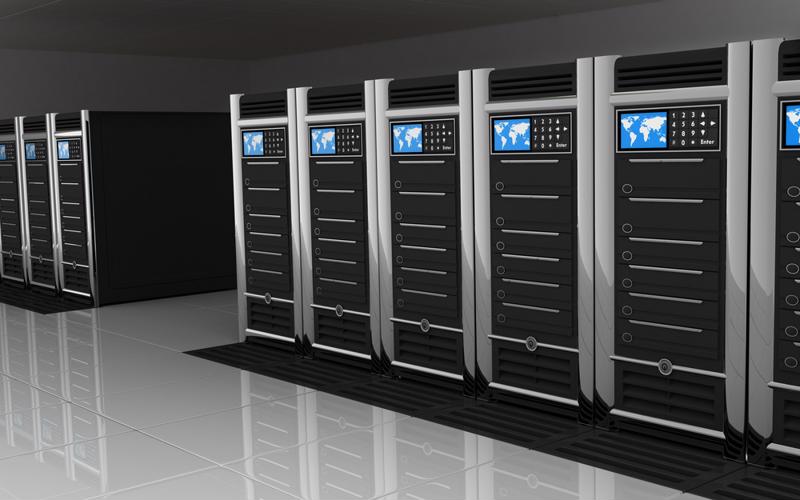
Growing volumes of data can be better managed with a converged infrastructure. Growing volumes of data can be better managed with a converged infrastructure.
Moving to a converged infrastructure

“The integrated infrastructure market increased by nearly 34% in 2014.”

Instead of buying one-off machines and separate CPU, storage and network components and having to configure them all, converged infrastructure allows IT administrators to access an preconfigured, integrated experience in a box. A growing number of enterprises are seeing the advantages to implementing converged infrastructure, according to research firm IDC. In the second quarter of 2014, the integrated infrastructure and platforms market increased by nearly 34 percent year-over-year and revenue for the first half of 2014 rose 36 percent.

Converged systems scale out performance and capacity by virtualizing computing and storage power across multiple nodes. Data protection and failover are managed between the nodes, and clients typically must start with a minimum of three to account for availability. Once the system has been implemented, users can add nodes on an individual basis in order to increase storage and computing resources.

There are a variety of benefits to converged infrastructure:

  • Faster Provisioning: By employing a converged infrastructure model, a job that may have once required a provisioning time of three weeks can be cut down to less than an hour in some instances.
  • Lowers costs: With convergence, fewer single-use components are needed, and fewer components will be used in the data center overall. This decrease means fewer components to manage, troubleshoot and operate, as well as a reduction in the physical footprint of the data center or other IT facility.
  • Simpler management infrastructure: A converged infrastructure centralizes the management of servers, networks and storage, creating more streamlined daily maintenance. This requires less personnel and a lower knowledge base as opposed to traditional upkeep, freeing up skilled tech workers for more business-critical functions.
  • Quicker IT response: Creates a more agile way to respond to changes in the marketplace or with business priorities.
  • Reduced siloing of IT teams: Instead of managing storage and CPU separately, everything is done together. Fewer overall IT resources are needed with converged infrastructure and more knowledge and cross-training becomes available throughout the business.
  • Improved control: Control is now centralized and management of multiple functions and devices can take place at one time.
  • Scalability and flexibility: Allows the capacity of the entire data center or IT footprint to be quickly adjusted to meet client demands.

Converged infrastructure offers business considerable savings as opposed to traditional approaches. As the market continues to evolve, systems will become simplified and more third-party integrators will emerge to take over the task from in-house teams. This will lead to increased options and lower costs. Modern converged systems focus management on virtual machines, moving commodity computing resources and disks to the background. As the market continues to grow, more options will emerge that offer both options in combined nodes, enabling improved scalability. Sometimes referred to as hyperconvergence, this unites storage, computing a networking in a single unit around a hypervisor that takes care of all of the management duties.

With enterprise data volumes increasing all the time and as the need for reliable, agile and secure management solutions become more important, working with a third-party service provider to create a converged infrastructure solution is more often than not the best way for business to access competitive advantages.

There’s more to data center security than you think

When it comes to computers and technology, there is one thing at the forefront of everyone's minds these days: security. This idea is especially critical when talking about data centers, as digital, physical and structural security are all critical to operations.

There are a variety of different security concerns when it comes to data centers, from compliance requirements to building security to protections against the weather. Businesses need to make themselves aware of the security precautions taken by their data center service provider and carefully consider three areas of security before choosing a facility.

"Businesses need to carefully consider three areas of security when choosing a data center."

Physical
Most people think digital security is the only concern when it comes to data centers, but if the power supply cuts out or a tornado tears the facility down, that can be even more debilitating than a data breach. Consider these physical aspects when choosing a data center:

  • A secure location: The site needs to be located a good distance away from company headquarters and out of the path of natural disasters like earthquakes, tornadoes and hurricanes.
  • Redundant utilities: A secure facility will employ two separate sources for critical utilities, being able to trace electricity back to two unique substations.
  • Controlled building access: Make sure the data center has security guards in place and a limited number of entry points into the building, as well as security cameras and gates to keep out unwanted visitors.
There are many different security concerns that must be addressed when choosing a <a  data-cke-saved-href=There are many different security concerns that must be addressed when choosing a data center.

Digital
While the physical considerations of a computing facility are very important to the overall security of the building, digital security precautions must also be taken in order to protect the files stored within.

  • Implement two factor authentication: Biometric identification is increasingly being used in data centers as a second layer of security to ensure only the appropriate people are handling certain information.
  • Encrypt data in motion: Encryption is a necessity when working within distributed computing environments where application workloads communicate across both private and public networks.
  • Meets multiple regulatory compliance requirements: Make sure any data center being utilized meets the necessary guidelines to be compliant with industry regulations for the sector you're operating in.

Structural
Separate from physical and digital security measures, steps must be taken to build security into a data center's infrastructure to create a robust protection strategy and atmosphere of defense.

  • Anticipate changes to workloads: Enterprise applications are not static entities, but are instead workloads that move from one location to another and must be monitored as they go. Utilizing adaptive security measures allows workloads to move freely while enabling IT administrators to focus on other business-critical operations.
  • Future-proof application development: Make sure security solutions are deployed that can stay consistent across private and public cloud platforms so the same level of protection will be maintained no matter where the apps run.
  • Audit application interactions: Periodically take stock of the traffic flowing between the individual workloads that make up each application. This will provide enterprises with a comprehensive view of the interactions taking place, as well as any connection requests from outside entities that may be popping up.

There's more to data center security than you think

When it comes to computers and technology, there is one thing at the forefront of everyone's minds these days: security. This idea is especially critical when talking about data centers, as digital, physical and structural security are all critical to operations.

There are a variety of different security concerns when it comes to data centers, from compliance requirements to building security to protections against the weather. Businesses need to make themselves aware of the security precautions taken by their data center service provider and carefully consider three areas of security before choosing a facility.

"Businesses need to carefully consider three areas of security when choosing a data center."

Physical
Most people think digital security is the only concern when it comes to data centers, but if the power supply cuts out or a tornado tears the facility down, that can be even more debilitating than a data breach. Consider these physical aspects when choosing a data center:

  • A secure location: The site needs to be located a good distance away from company headquarters and out of the path of natural disasters like earthquakes, tornadoes and hurricanes.
  • Redundant utilities: A secure facility will employ two separate sources for critical utilities, being able to trace electricity back to two unique substations.
  • Controlled building access: Make sure the data center has security guards in place and a limited number of entry points into the building, as well as security cameras and gates to keep out unwanted visitors.
There are many different security concerns that must be addressed when choosing a <a  data-cke-saved-href=There are many different security concerns that must be addressed when choosing a data center.

Digital
While the physical considerations of a computing facility are very important to the overall security of the building, digital security precautions must also be taken in order to protect the files stored within.

  • Implement two factor authentication: Biometric identification is increasingly being used in data centers as a second layer of security to ensure only the appropriate people are handling certain information.
  • Encrypt data in motion: Encryption is a necessity when working within distributed computing environments where application workloads communicate across both private and public networks.
  • Meets multiple regulatory compliance requirements: Make sure any data center being utilized meets the necessary guidelines to be compliant with industry regulations for the sector you're operating in.

Structural
Separate from physical and digital security measures, steps must be taken to build security into a data center's infrastructure to create a robust protection strategy and atmosphere of defense.

  • Anticipate changes to workloads: Enterprise applications are not static entities, but are instead workloads that move from one location to another and must be monitored as they go. Utilizing adaptive security measures allows workloads to move freely while enabling IT administrators to focus on other business-critical operations.
  • Future-proof application development: Make sure security solutions are deployed that can stay consistent across private and public cloud platforms so the same level of protection will be maintained no matter where the apps run.
  • Audit application interactions: Periodically take stock of the traffic flowing between the individual workloads that make up each application. This will provide enterprises with a comprehensive view of the interactions taking place, as well as any connection requests from outside entities that may be popping up.

Top 3 IT trends impacting data center infrastructure

As technology continues to play an increasingly large role in the enterprise, the investment in infrastructure to sustain the necessary hardware and software has become overwhelming for many organizations, especially those in the public sector. Managing in-house IT systems without the help of an expert third party can sometimes be incredibly expensive and complicated, and few agencies have the budget or manpower to address server sprawl or maintain outdated systems and infrastructure components on their own. Conversely, while many organizations are offloading assets to the public cloud, such a strategy involves giving up a lot of control and direct oversight over data, something that government agencies simply can't do.

In order to cope with growing technological demands, many public sector organizations are now looking to take advantage of emerging IT trends – hybrid cloud computing, mobility, big data –  to offload their data center operations. State and local agencies are beginning to take advantage of the increased capabilities these new innovations offer by modernizing their data center technologies and applying hybrid cloud services wherever possible. These changes help to improve the efficiency and cost-effectiveness of their data center infrastructure, as well as protect against hardware and software failure.

Mobility
Public sector IT administrators find themselves caught between a rock and a hard place with new mobile technologies, as they offer employees a variety of benefits but also present widespread security and infrastructure challenges. Network strain, increased bandwidth demands, additional storage needs and more strict security measures all become necessary when an increased number of mobile devices are put to work within an organization. Most public sector IT departments do not have the human or fiscal resources necessary to improve and secure mobile access as they are already at their limits trying to support current data center operations. To solve this problem, many organizations are employing virtualized machines and storage to keep up with the bandwidth demands and user expectations.

Hybrid cloud computing
The ability of cloud solutions – when properly paired with on-premises options – to reduce server sprawl and maintenance worries are drawing many government agencies to the technology, and many have adopted cloud services for all of their routine business processes. A survey of government IT executives conducted last year by American City & County magazine revealed that almost half of all respondents utilized cloud services, with the most common use case being email and data storage. Participants reported experiencing a number of advantages after employing a cloud platform, including better accessibility from mobile devices, reduced IT infrastructure build-out and maintenance cost and improved management efficiency. While many government agencies aren't able to use public cloud providers because they do not hold the necessary state and local certifications, alternative solutions like colocation and shared private cloud environments are rapidly being employed. 

Big data
With so many business functions revolving around the Internet these days, government agencies and public sector organizations are dealing with massive amounts of data on a daily basis. The advent of big data analytics is making these data stockpiles incredibly useful by allowing groups to improve efficiency and decision-making, as well as creating a better understanding of citizens' needs. However, most agencies have less than half of the necessary storage capacity and computing power to effectively leverage their big data initiatives, according to the American City & County survey.

A major hurdle when employing data analytics is sufficiently meeting federal, state and local regulations regarding the proper collection and storage of data. In order to effectively secure their information, IT departments should look to utilize a tiered storage model. Each tier is dictated by specific spending, access and capacity requirements, providing each type of data with the right amount of access and security, which is generally more cost effective. Different categories of data are assigned to different types of storage solutions, placing the most sensitive information that is frequently accessed in storage from which it can be retrieved easily and data that is less critical would be kept in lower storage.

Increasing focus on data center infrastructure
Taking advantage of the hybrid cloud, mobility and big data can completely transform public sector IT operations, but changes must be made to data center infrastructure. Agencies can improve the way they manage their computing facilit​ies and boost data center efficiency by making enhancements in key areas like power usage, virtualization, data storage and network infrastructure. Changes in any of these categories would contribute to the improved efficiency, performance and cost savings of data center infrastructure, as well as creating more resilient facility. 

What do schools need to prepare for new testing standards?

The summer months are fast approaching, and with the end of school year in sight, it means students all over the country are preparing to take standardized tests before they can enjoy a three-month break. The new Common Core standards have brought big changes to the classroom, but one of the most noticeable is the online assessments that will soon be given to test how students are comprehending material. School district administrators have just about one year to go until their teachers have to start giving the online tests, so now is the time for IT decision-makers to inventory the technology and connectivity available in order to make the necessary changes before assessment day arrives.

"The Common Core digital assessment can bring challenges for schools when it comes to IT infrastructure."

The Common Core digital assessments can bring real challenges for the average school district when it comes to having the necessary connectivity and technological capacity. Even districts that have started to invest heavily in new computers and other hardware are finding that they underestimated the need for devices during the exam and will have to stagger test schedules in order to make sure all students are able to take the assessment during the required window without disrupting other class time.

New online testing requires schools to inventory their IT infrastructure.New online testing requires schools to inventory their IT infrastructure.

Schools look to enhance tech infrastructure before test season
To help school districts get ready for the Common Core tests, the two main organizations responsible for designing the test – the Smarter Balanced Assessment Consortium and the Partnership for Assessment of Readiness for College and Careers – have run pilot tests to identify any bugs in the system and are planning to stage more elaborate and comprehensive field tests of the exam closer to the launch date.

Smarter Balanced and PARCC have also each published their own minimum and recommended guidelines for the hardware, software and bandwidth required to deliver the assessments properly. Both organizations offered similar recommendations, suggesting that districts employing devices running on Microsoft operating systems use Windows 7 or higher and those running on Macs utilize version 10.7 or higher. In an attempt to guard against interruptions caused by schools' lack of connectivity, PARCC is making it possible for schools and districts to take advantage of caching, in which administrators download encrypted tests to local servers prior to the exam in order to reduce strain on local bandwidth. Smarter Balanced is not recommending schools use caching for their tests – instead the organization is relying on a process that transmits student responses to a central server bank immediately after an answer is given and protects those answers internally.

Clearly there is still a lot of work to be done within most school districts in order for them to be ready to administer the new Common Core assessments. The most reliable way for schools to ensure they will be capable of providing the connectivity and technological infrastructure necessary is to partner with a trusted service providers. The experts at ISG Technology have decades of industry experience to offer and are able to create a customized program that will meet individual school's needs. ISG enables districts to access the support and network capacity necessary for a successful deployment.