Cloud vs. colocation: What's the best option?

Technology is changing more rapidly than ever before, and as such, the decision to keep data on-site or outsource it is becoming more and more relevant. While many companies may decide to keep their storage needs in-house, a wide range of businesses simply do not have this capacity or they choose not to take on this responsibility.

The reasons for this vary, however, the point is that some companies would absolutely benefit from storing data off-site. It is at this point that these companies must decide between cloud services, colocation or a combination of the two.

Cloud or colocation: Which is best for your company?
To begin, it is important to define cloud storage and colocation so that an informed decision about their differences can be made. Cloud services are where a cloud provider gives a company the ability to remotely access their resources and stores everything in the own data center environment. 

While this limits the hardware options a company can choose from, it gives the added bonus of keeping the responsibility of all system upkeep firmly in the hands of the cloud provider. Companies with a weak IT infrastructure or even those wishing to keep their IT department focused on a limited number of internal goals would absolutely benefit from cloud services and should put some serious thought into considering their usefulness.

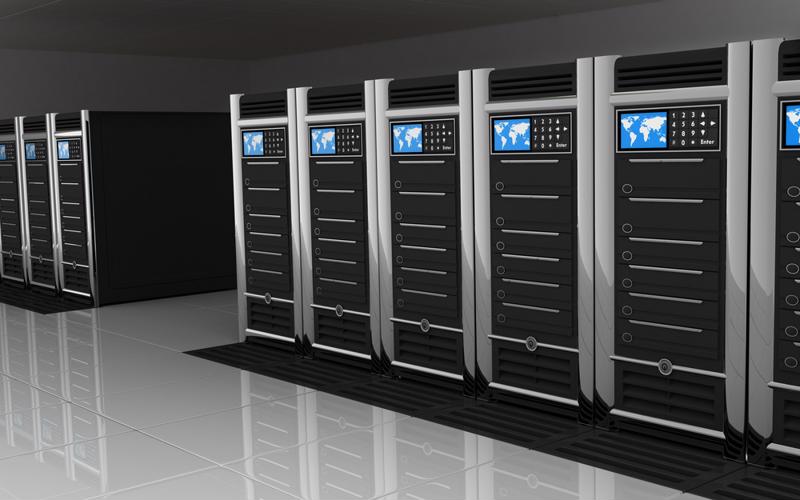
Colocation, on the other hand, is where companies purchase and bring their own equipment to an outside data center with the added bonus of sharing power and other hardware needs with fellow tenants. Basically, this option is like renting an apartment and having other companies with similar data management needs as roommates. Colocation also allows for companies to have their data stored offsite, which gives an extra amount of security in terms of disaster recovery and business continuity.

It is these specific benefits that have lead consulting firm Vanson Borne to predict that colocation is going to be the biggest outsourcing approach over the next year. While there are many advantages to colocation, companies should understand the responsibility of this sort of data storage arrangement.

Colocation requires that companies purchase all their own hardware, and as such a deep knowledge of these systems is typically needed in order to choose the correct equipment necessary for their specific needs. Thankfully, colocation experts such as ISG Technology have a wide understanding of these infrastructures and can help clients with their colocation needs. 

Obviously, any company that is deciding between these two options needs to think long and hard about its data storage needs. Does the company need to focus more on internal IT needs than it does the management of data storage hardware? Or does the company not want to use another company's server to store data? Perhaps some data can be stored with a cloud service provider while other data is best kept within hardware owned by the company. There are advantages and disadvantages to both, as well as to combining the two in a more hybrid arrangement. There is no "better" option because every company's needs differ, and as such, each company needs to come to the understanding of which option is best for its specific requirements. 

Virtualization of the classroom

It's no secret that many schools and districts in America are severely underfunded. Despite being the best way to guarantee an educated and prosperous populace, education in America has gone through some serious budget cuts since the recession in 2008. In fact, a review of the 2013-2014 school year by state found that 35 states are providing less funding per student than they did before the recession. And while this needs to be worked on at a governmental policy level, as it stands, schools have to make due with what they have. 

That being said, costs need to be cut where they can. With this in mind, virtualization of computer and IT systems within schools is emerging as an effective way to use a budget effectively while still providing the technological education necessary to thrive in the modern world. 

Virtualization: What is it and how is it cost-effective for schools?
In order to grasp why virtualization is so beneficial for the education system, it's important to fully understand what it is. Basically, there are two types of virtualization. The first has to do with a school's use of servers. Server virtualization allows a single physical server to act as multiple by housing many virtual ones in one machine.

This has a dual effect in terms of cost-cutting. First, it cuts down on the physical costs of multiple servers. With machines with zero VMs, 95 percent of a server's capacity isn't being used in the current model. If schools were to virtualize, their hardware costs in terms of servers would plummet as they began to use servers more effectively and efficiently.

Server virtualization would also reduce costs by allowing different school districts to share files more easily. As new instructional materials are distributed, sharing of these materials in a virtual environment is typically as simple as a file copy operation

The second common type of virtualization is that of the desktop. As knowledge of computers becomes more and more necessary to function within the modern world, classrooms will need to continue to add them into curricula. As this happens, students will need a desktop specific to their classes and their schedule. Before virtualization, a student would need to be given a specific laptop if the school wished for them to have a desktop catered to the student's needs in each of their classrooms.

However, desktop virtualization allows for a student's workplace to follow them from class to class without the necessity of a specific laptop assigned to them. This practice also allows for a greater safety in terms of the students files in a disaster recovery scenario. If a computer the student is working on crashes or stops working for whatever reason, their entire desktop can be moved from one work station to another without any level of difficulty. This not only saves money in terms of technical support, as a student who can't access their files would need help or risk missing the day's lesson, but it also saves the headache of having to start from scratch. 

Data lost is money lost

When people think of Google, they tend to imagine the search engine giant as an indestructible force in the technical world. It would seem that Google is such a big player that it can handle any and all obstacles thrown in its way. Google's recent foray into literally any part of the technology industry it sees fit to invest in shows the scale at which the company operates. And while Google's data is probably more secure than the average company from hacking attempts, one force it simply can't match is that of Mother Nature.

Nature's power over man was proven recently when one of Google's Belgian data centers was struck by lightening four times. Although a vast majority of data survived (well over 99 percent, in fact) the point still remains that there are some problems that even the biggest of companies simply can't avoid. If Google's data storage is at risk, how can any other company even hope to protect itself from every single threat imaginable?

The real cost of data loss: Downtime
As any company that has lost data can attest, one of the most frustrating parts about losing data is the amount of time and money it takes to get the company up and running again. In order to find out just how much money data loss and downtime costs companies, EMC Corporation spoke to 3,300 IT professions from 24 countries in 2014. A SecurityWeek article about the study reported that organizations of more than 250 people lost some $1.7 trillion due to downtime and data loss in 2014 alone.

That's quite a lot of money to be lost and only speaks to the sheer, unimaginable magnitude of the problem that is data loss. To compound this, the massive amount of lost revenue felt by companies due to this problem is only made worse considering the study's finding that 64 percent of surveyed enterprises ran into downtime or data loss in the past year.

This kind of data should be a rude awakening to companies that think they are above the threat of data loss. No one is completely safe from data loss, and the only way a company can truly protects itself is to back up its data as much as possible. A robust online backup service, such as what is offered by ISG Technology, is peace of mind in a world where industry heavy-hitters like Google can lose data in a freak accident.  

Hybrid cloud solutions provide the best of both worlds for enterprise data storage

The cloud has been making quite the splash in the enterprise recently, providing businesses with a better solution for data storage and mobile working opportunities. As more organizations implement cloud strategies, it is becoming clear that a large number of IT administrators are choosing hybrid environments to make the most out of their cloud investments and experience improved elasticity, availability and security at a reasonable price. Hybrid cloud adoption is growing so quickly, in fact, that the number of businesses implementing a hybrid environment is expected to triple in the next three years, according to Data Center Knowledge contributor Toby Owen.

"Businesses implementing a hybrid environment are expected to triple in the next 3 years."

A major part of the appeal of hybrid cloud deployments is that they offer the best of public and private cloud environments. While many organizations enjoy the convenience and cost-effective aspects of public cloud infrastructure, it can be difficult for IT administrators to approve placing business-critical applications and sensitive data in a public deployment. Private cloud environments offer improved security, as they are managed by the company itself. However, they are less agile than public platforms and can make it difficult for businesses to run efficiently.

"When you look at cloud in general, and you say 'I'm going to take my data, I'm going to store it somewhere that's outside my own data centers,' that already is a big hurdle to cross for many companies," said Rani Osnat, vice president of strategic marketing at data protection hardware provider CTERA Networks. "What you need to do is wrap enough security around it for that company to feel at least as comfortable with that concept as they do with storing it in-house."

Hybrid cloud is a rising star in the business world.Hybrid cloud is a rising star in the business world.

Enterprises see benefits with hybrid cloud solutions
Hybrid clouds merge both of those aspects together, creating an ideal deployment by offering the best of both worlds. Applications that need to be easily accessed can be kept in a more open public environment while sensitive systems and files can be kept in more secure private environments, ensuring all assets have the level of security and accessibility necessary. However, while the security and agility benefits of hybrid cloud deployments have made the option increasingly popular, a number of factors have played a part in the hybrid cloud boom, including price, performance and capacity.

Cost: According to research conducted by technology market research firm Vanson Bourne, cost is consistently reported as being a major factor when IT administrators are deciding on cloud investments. Since cloud computing is able to lower costs by reducing the amount of physical equipment necessary, the choice has become popular with many enterprises. Hybrid cloud infrastructure helps organizations reduce costs even more by offering businesses the ability to choose cloud features à la carte, picking everything from the operating system to the firewall protections. When companies customize each piece of their cloud environment, they are able to have total control over the cost, resulting in significant price reductions for most enterprises.

Performance: The technology that goes into a hybrid cloud deployment has grown increasingly sophisticated over the last few years, offering improved functionality and accessibility as well as enhanced capabilities. Today's hybrid cloud solutions are starting to incorporate many advanced offerings from infrastructure and software providers. Because these environments incorporate sophisticated features like disaster recovery, bare metal and virtual servers, online portals and HPC capabilities, service providers are able to offer hybrid cloud solution bundles that can meet the specific requirements of individual businesses. With more use cases and wider applications, hybrid cloud is a natural solution for businesses of all sizes.

Capacity: One of the most pressing reasons so many organizations are turning to hybrid cloud solutions is due to a need for more data storage capacity. A growing number of enterprises are now utilizing big data analytics, and Gartner has predicted that 80 percent of business processes and products will be reinvented, digitized or totally eliminated due to big data by 2020. Dealing with such a massive amount of information requires companies to utilize a cloud solution that is not only agile enough to handle processing such large amounts of data, but has the capacity to store the information in the first place. Hybrid cloud is the reliable answer, melding security and agility into one ideal platform.

Hybrid cloud market grows as CIOs embrace the platform

With cloud computing becoming an increasingly important part of enterprise IT infrastructure, service providers are beginning to offer a growing number of custom or semi-custom options for businesses interested in creating a unique environment to store their sensitive data. Hybrid cloud solutions, which mix both private and public platforms to give organizations the benefits associated with both environments, are realizing increased popularity as more enterprises want to create solutions unique to their operations.

According to a recent report from market research firm MarketsandMarkets, hybrid cloud platforms offer businesses high-end solutions like integration, networking, consulting, cloud management and security. Because of these benefits, nearly half of enterprises surveyed said they were planning to adopt a hybrid cloud solution in the near future. Hybrid cloud services are becoming so popular, in fact, that the report estimates the market will be worth nearly $85 billion in 2019, increasing at a compound annual growth rate of 27 percent for the next four years. The biggest regional market for such services is expected to be North America, with all other regions except Europe expected to increase their share rapidly with high annual growth rates.

Researchers working on the report noted that adoption rates would likely be even higher than they currently are if not for data security concerns from consumers and worry about technological constraints causing problems with performance for networks and applications. While all forms of cloud computing have their downsides, innovations in the industry and improvements to security, functionality and operability are constantly being introduced.

Hybrid makes the transition to cloud easier
Making the move to a hybrid environment allows IT administrators to gain a better understanding of what elements they like and dislike from each type of platform and decide how to meet the company's needs. As Cloud Tech contributor James Butler noted, adopting a hybrid cloud strategy in which workloads are moved over slowly from one platform to another, companies are able to take control of their IT infrastructure and encourage real change.

"Taking an incremental approach to hybrid cloud gives CIOs a platform to lead real business change from the center, and avoid being bypassed or replaced," said Butler. "By driving the strategy and promoting the positive benefits of cloud, CIOs will reduce risks and maximize investments; rather than simply ignoring cloud and falling behind."

Using a hybrid strategy offers enterprises the ability to test new ideas in a secure environment before moving them out into a public arena, dramatically reducing development time and costs and improving troubleshooting efforts. At the same time, moving workloads to a public cloud environment in incremental stages helps companies avoid the challenges presented by traditional IT infrastructures and experience agile and cost-effective service. Benefits can also be realized in a much shorter time frame – in as little as 12 to 18 months with a hybrid platform as opposed to five to 10 years with traditional approaches.

Making it through extreme weather with your network and business intact

It is hard not to get excited about the start of summer. With its warm weather and longer days, summer brings with it a sense of freedom and happiness that is greatly anticipated after the harsh cold and endless nights of winter. However, summer does not just bring along sunshine and smiles. It also brings strong storms – lightning, hurricanes, tornadoes, etc. – that can severely disrupt businesses and their technological infrastructure.

"40% of small businesses won't reopen after being affected by a weather-related disaster."

With extreme weather on its way, businesses need to get a jump start on their disaster recovery and business continuity planning. Enterprises can be severely affected by natural disasters, leading to lost revenue and major repair costs. Storms can have such a negative effect on companies that 40 percent of small businesses will not reopen after being affected by a weather-related disaster this year, according to the Federal Emergency Management Agency.

Luckily, organizations with a strong business continuity solution in place can weather the storm and come out just as well as they went in. Here are a few tips to help enterprises put together the best disaster recovery plan possible:

Businesses need to put recovery plans in place before severe weather disrupts operations.Businesses need to put recovery plans in place before severe weather disrupts operations.

Understand how a disruption will affect different assets
There are a variety of different variables that must be considered when putting a business continuity plan in place. How will employees access company programs and files? What information is critical? Who needs to be made aware of a service disruption or office closure? All of these things and much more must be addressed by a recovery plan.

In a severe weather event, the majority of employees will be accessing files remotely, so a cloud-based solution is the most reliable option to keep operations running smoothly. A cloud disaster recovery as a service option will keep business going after a disruption, but not all files will be available immediately, nor should they be. Non-essential data should be given low priority in DR solutions, saving space for files crucial to daily operations. Utilizing the cloud will also provide administrators a way to contact employees, vendors and any other necessary personnel that the office has experienced a disruption.

Test your plan beforehand
It is important to identify any problems or gaps in your DR plan before it needs to be put to use so any issues can be fixed. Scheduling periodic tests ensures the most reliable business continuity possible. Make sure to test each necessary system – phones, computers, data recovery, servers, etc. – separately and as a whole to discover any pain points before the real thing happens.

Work with a trusted industry partner
Putting a reliable DR plan in place can be difficult, but working with a knowledgeable service provider can make everything run smoothly. Companies like ISG Technology offer cloud-based solutions customized for the client that address the specific needs of each organization. ISG's expert staff take care of the maintenance required to keep a DRaaS solution running, letting users focus on other critical functions in times of emergency. Not only is ISG's staff prepared to keep your business running during extreme weather, but its infrastructure is ready as well. ISG's Missouri data center is located within a limestone bunker, shielding it from practically every kind of extreme weather event that might come its way. With such a strong network of facilities and staff, disaster recovery services from ISG are the most reliable choice to keep enterprises running no matter what mother nature brings. 

There's more to data center security than you think

When it comes to computers and technology, there is one thing at the forefront of everyone's minds these days: security. This idea is especially critical when talking about data centers, as digital, physical and structural security are all critical to operations.

There are a variety of different security concerns when it comes to data centers, from compliance requirements to building security to protections against the weather. Businesses need to make themselves aware of the security precautions taken by their data center service provider and carefully consider three areas of security before choosing a facility.

"Businesses need to carefully consider three areas of security when choosing a data center."

Physical
Most people think digital security is the only concern when it comes to data centers, but if the power supply cuts out or a tornado tears the facility down, that can be even more debilitating than a data breach. Consider these physical aspects when choosing a data center:

  • A secure location: The site needs to be located a good distance away from company headquarters and out of the path of natural disasters like earthquakes, tornadoes and hurricanes.
  • Redundant utilities: A secure facility will employ two separate sources for critical utilities, being able to trace electricity back to two unique substations.
  • Controlled building access: Make sure the data center has security guards in place and a limited number of entry points into the building, as well as security cameras and gates to keep out unwanted visitors.
There are many different security concerns that must be addressed when choosing a <a  data-cke-saved-href=There are many different security concerns that must be addressed when choosing a data center.

Digital
While the physical considerations of a computing facility are very important to the overall security of the building, digital security precautions must also be taken in order to protect the files stored within.

  • Implement two factor authentication: Biometric identification is increasingly being used in data centers as a second layer of security to ensure only the appropriate people are handling certain information.
  • Encrypt data in motion: Encryption is a necessity when working within distributed computing environments where application workloads communicate across both private and public networks.
  • Meets multiple regulatory compliance requirements: Make sure any data center being utilized meets the necessary guidelines to be compliant with industry regulations for the sector you're operating in.

Structural
Separate from physical and digital security measures, steps must be taken to build security into a data center's infrastructure to create a robust protection strategy and atmosphere of defense.

  • Anticipate changes to workloads: Enterprise applications are not static entities, but are instead workloads that move from one location to another and must be monitored as they go. Utilizing adaptive security measures allows workloads to move freely while enabling IT administrators to focus on other business-critical operations.
  • Future-proof application development: Make sure security solutions are deployed that can stay consistent across private and public cloud platforms so the same level of protection will be maintained no matter where the apps run.
  • Audit application interactions: Periodically take stock of the traffic flowing between the individual workloads that make up each application. This will provide enterprises with a comprehensive view of the interactions taking place, as well as any connection requests from outside entities that may be popping up.

There’s more to data center security than you think

When it comes to computers and technology, there is one thing at the forefront of everyone's minds these days: security. This idea is especially critical when talking about data centers, as digital, physical and structural security are all critical to operations.

There are a variety of different security concerns when it comes to data centers, from compliance requirements to building security to protections against the weather. Businesses need to make themselves aware of the security precautions taken by their data center service provider and carefully consider three areas of security before choosing a facility.

"Businesses need to carefully consider three areas of security when choosing a data center."

Physical
Most people think digital security is the only concern when it comes to data centers, but if the power supply cuts out or a tornado tears the facility down, that can be even more debilitating than a data breach. Consider these physical aspects when choosing a data center:

  • A secure location: The site needs to be located a good distance away from company headquarters and out of the path of natural disasters like earthquakes, tornadoes and hurricanes.
  • Redundant utilities: A secure facility will employ two separate sources for critical utilities, being able to trace electricity back to two unique substations.
  • Controlled building access: Make sure the data center has security guards in place and a limited number of entry points into the building, as well as security cameras and gates to keep out unwanted visitors.
There are many different security concerns that must be addressed when choosing a <a  data-cke-saved-href=There are many different security concerns that must be addressed when choosing a data center.

Digital
While the physical considerations of a computing facility are very important to the overall security of the building, digital security precautions must also be taken in order to protect the files stored within.

  • Implement two factor authentication: Biometric identification is increasingly being used in data centers as a second layer of security to ensure only the appropriate people are handling certain information.
  • Encrypt data in motion: Encryption is a necessity when working within distributed computing environments where application workloads communicate across both private and public networks.
  • Meets multiple regulatory compliance requirements: Make sure any data center being utilized meets the necessary guidelines to be compliant with industry regulations for the sector you're operating in.

Structural
Separate from physical and digital security measures, steps must be taken to build security into a data center's infrastructure to create a robust protection strategy and atmosphere of defense.

  • Anticipate changes to workloads: Enterprise applications are not static entities, but are instead workloads that move from one location to another and must be monitored as they go. Utilizing adaptive security measures allows workloads to move freely while enabling IT administrators to focus on other business-critical operations.
  • Future-proof application development: Make sure security solutions are deployed that can stay consistent across private and public cloud platforms so the same level of protection will be maintained no matter where the apps run.
  • Audit application interactions: Periodically take stock of the traffic flowing between the individual workloads that make up each application. This will provide enterprises with a comprehensive view of the interactions taking place, as well as any connection requests from outside entities that may be popping up.

Enterprise adoption of cloud dramatically increases as users see tangible benefits

Even though the cloud has been around for many years now, it seems like every year is the year when the technology is supposed to finally make it into the mainstream. Enterprises have increased adoption of the cloud in recent years, however, and now it seems that the technology is finally being implemented because of its real-world user benefits instead of purely based on hype. While companies once simply deployed cloud solutions because they knew they needed to invest in the technology to stay ahead of the curve, now organizations are looking for cloud platforms that can solve tangible business problems.

"94% of IT departments are expected to increase cloud use over the next 12 months."

The realization of its real-world benefits is causing cloud services to see dramatically increased adoption, with rates growing between 30 and 40 percent annually for the next five years, according to a recent report from Rise. According to the study, 94 percent of IT departments are expected to increase their use of cloud computing over the next year.

Research from other analyst firms have also found that enterprise interest in the cloud is growing. A recent report by IDC found that spending on cloud services will have created nearly 14 million jobs worldwide between 2011 and the end of this year. The top three industries expected to benefit the most from jobs created by cloud computing are communications and media, banking and manufacturing.

"For most organizations, cloud computing should be a no-brainer, given its ability to increase IT innovation and flexibility, lower capital costs, and help generate revenues that are multiples of spending," said IDC chief research officer and senior vice president John Gantz. "Enterprises that embrace cloud computing reduce the amount of IT time and budget devoted to legacy systems and routine upgrades, which then increases the time and budget they have for more innovative projects. When IT innovation happens, business innovation is reached, which then supports job creation."

Enterprise cloud investments are yielding real world benefits.Enterprise cloud investments are yielding real world benefits.

Clearly research has shown that businesses are realizing enough benefits from the cloud that they are dramatically increasing their investments in the technology. But what exactly are the advantages they are experiencing?

Modernization
The current tech landscape is changing so rapidly that even companies that try and stay ahead of the curve can suddenly find themselves using out-of-date systems and hardware in seemingly no time at all. Using the cloud allows companies to stay nimble and adapt to a changing enterprise environment without the need for large upfront investments or complete system overhauls. The cloud also makes it easy to test new programs and applications without causing too much internal disruption.  

Improved mobile access
One of the original reasons cloud computing became such a popular concept in the enterprise is because of its ability to connect people together from multiple locations at once as if they were in the same room. Employing the cloud for business allows organizations to hire the best candidate for the job no matter where they may be located, as well as quickly and easily enter foreign markets without dramatically increasing costs.

Reduction of internal IT resources
For many businesses in which IT isn't a core competency, it can be difficult to support the appropriate internal IT resources to run the company. By implementing a cloud solution, organizations can rely on a third-party provider to do much of the heavy lifting – maintaining servers, updating systems, keeping an eye on security issues, etc. For smaller companies without the budgets to hire the necessary IT staff or even larger companies that don't want to handle such tasks themselves, the cloud is a reliable option that offers enormous benefits with little hassle.

C-Suites increasing concerned about cybersecurity

For retailers, the cybersecurity horror stories are almost too numerous to count: Target, Neiman Marcus, Home Depot, etc. But for executives in other sectors, the cautionary tale is that of health insurer Anthem.

For directors of companies in industries like finance and health care that are centered around client trust, suffering a major breach like the one that hit Anthem at the beginning of 2015 is just as devastating. More than 80 million account holders were affected during the breach, making it the largest hack of its kind. In an interview with CIO, Peter Gleason, president of the National Association of Corporate Directors, explained that decision-makers in these industries are especially on edge right now because cyberattacks are in the news every day and are kept front of mind.

“It’s the foremost issue on directors’ minds right now because it’s tied into the risk structure of the organization,” said Gleason.

“Last year nearly 43 million security incidents were detected.”

While the risks associated with hackers and cyberattacks are the hottest topic in board meetings, corporate oversight of cybersecurity follows behind in a close second. Last year nearly 43 million security incidents were detected, an increase of 48 percent from 2013, according to research by professional services firm PricewaterhouseCoopers. The average cost of those incidents was around $2.7 million, and the amount of businesses that reported losing more than $20 million due to a security incident increased 92 percent between 2013 and 2014. Perhaps the most worrying statistic is that as many as 71 percent of cyberattack victims did not detect the hack themselves, but instead were informed by a third party about the issue.

Recent data breach increases are causing executives to step up cybersecurity conversations.Recent data breach increases are causing executives to step up cybersecurity conversations.

Data breaches come with silver lining
While this may all seem like bad news, it does come with a silver lining. According to a recent study by business risk consulting firm Protiviti, there is a positive correlation between how much the board is engaged with cybersecurity and the strength of IT security solutions. The prevalence of data breaches has forced decision-makers to be more concerned with their organizations’ cybersecurity posture and fostered increased communication between CIOs and board members.

“By providing corporate directors with meaningful intelligence on a regular basis, savvy CIOs and CISOs not only educate their boards about the issues they should focus on as they oversee security-related initiatives; they also garner high-level support for building robust security systems and adopting processes and policies necessary to protect corporate data,” CIO contributor Stephanie Overby noted.

Cybercriminals continue to grow more sophisticated and invent new attack methods to target organizations storing large amounts of data. One of the most reliable ways to protect client data is to utilize cloud storage services. Information stored in the cloud is easily encrypted and can be kept in a separate place from other enterprise information. Employing a cloud solution also improves business continuity procedures by keeping sensitive data in the cloud as duplicate data can be stored off-site and kept safe in case a system is compromised or a disruptive event were to occur.