
Exploring Microsoft’s new partnership with Symantec


Early in February 2018, Microsoft and Symantec announced a partnership, one that allows Symantec to integrate its security solutions with Microsoft Azure and Office 365. The move is an expansion of service alignment, following the October 2017 announcement that Symantec will use the Azure cloud to deliver its Norton consumer-grade cybersecurity software, according to Microsoft.

Both companies have praised the initial move as a win-win. Microsoft gained a valuable vendor and Symantec expanded its potential audience size and improved the delivery system for its products. Evidently, the two organizations enjoyed working with one another, as this latest move represents a definite ramp up in the partnership.

Symantec secures Microsoft’s Cloud
“The collaboration between Microsoft and Symantec brings together advanced network security and intelligent cloud infrastructure… Symantec’s full suite of security and compliance controls complement our broad set of Azure security solutions to provide customers with an ideal, trusted cloud platform,” said Scott Guthrie, executive vice president, Microsoft Cloud and Enterprise Group, during the expanded partnership announcement.

It is easy to see what Microsoft stands to gain from this partnership. Despite the reputation and history of the product, Azure has been playing aggressive catch up to Amazon’s AWS in terms of user base. According to Gartner research, AWS still leads the market in turns of overall usage, especially in the infrastructure-as-a-service sector. While Microsoft is in secure control of second place, the company is likely looking for ways to transform Azure into the superior product.

Since both Azure and AWS market themselves as widely flexible cloud solutions, the clear advantage may come in terms of cybersecurity standards. Symantec has long been seen as a leader in the antivirus and cybersecurity market. Outfitting the Microsoft Azure and Office 365 platforms with Symantec Web Security Service enables corporate Azure and 365 users to better manage cloud data, prevent information leaks and guard against data breaches.
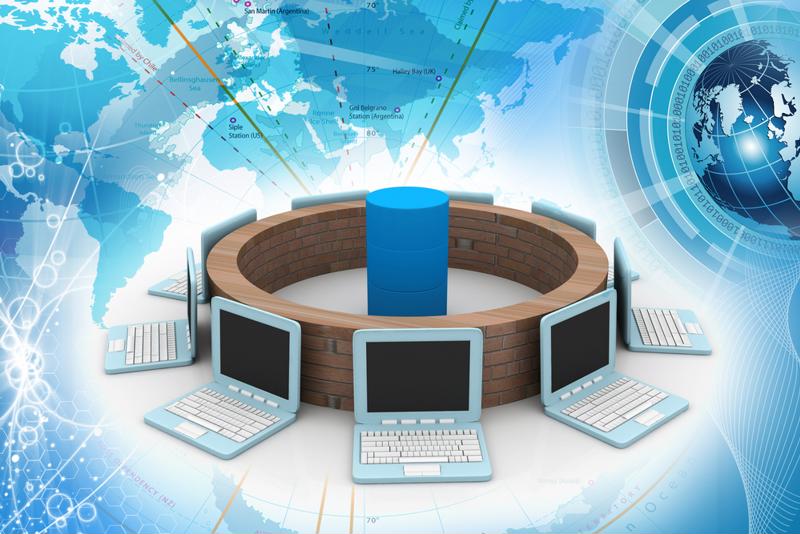
Cloud services providers are rushing to diversify their solutions to serve a variety of clients. Security measures are still catching up to this design choice. Cloud services providers are rushing to diversify their solutions to serve a variety of clients. Security measures are still catching up to this design choice.

Looking ahead to 2018
Symantec clearly sees the role of cybersecurity providers growing in 2018. The company blog outlined a series of new challenges that it expects to see in the coming year. While 2017 headlines included the dramatic WannaCry ransomware attack, Symantec feels that blockchain – digital record-keeping software made popular through Bitcoin – may headline 2018’s largest cybersecurity concerns. Part of this comes with its wider adoption.

Nokia announced earlier in February that it will use blockchain to power its financial transactions in its new sensing-as-a-service platform and other companies are expected to follow. As blockchain handles increasing amounts of money in the digital space, it is logical to assume the number and intensity of cyberattacks will increase. Symantec expects that cyber criminals will even use artificial intelligence and machine learning to improve their attack methods.

Symantec also expects organizations will struggle with IaaS (the large theater where Microsoft and Amazon are the two main providers). The company feels the flexibility and scalability of these solutions will be the main problem as both will increase the change of errors in implementation and design. This scenario seems likely as not every client using IaaS has an in-house IT team to help facilitate the transition.

Giving Azure and 365 the extra Symantec coverage may be the difference maker in which of the two leading IaaS providers avoids a massive 2018 data breach.


How schools can upgrade their online infrastructure

Nothing is perhaps more important to the U.S.'s future than maximizing the potential of education. It is through mass schooling that children learn the essential social and learning skills that will prepare them for adult life and professional work. While education is a complex process with many different factors affecting outcomes, access to technology clearly plays a role in children's learning.

It is unfortunate then to learn that 6.5 million students in the U.S. still lack broadband, according to Education Superhighway. Broadband is an essential communication medium for educational facilities with large student and teacher populations, as it allows for messages and online actions to be completed simultaneously.

However, broadband is only one crucial aspect of improving online infrastructure in schools and other educational facilities. Further complicating the matter are tight budgets that many of these institutions must operate within. As the Center on Budget and Policy Priorities reported, state and local funding is still recovering and is well below what it was in 2008.

With this in mind, schools may have to focus on the most essential upgrades first, spreading out the investments in a way that maximizes learning potential.

The advantages of a fiber connection
Sites like Education Superhighway are big on the advent of fiber in the classroom. According to Techno FAQ, one of fiber's biggest advantages is its reliability. Fiber functions on symmetrical connections, allowing downloads and uploads to happen at the same time without impacting connection speed. The system also tends to be more passive and separated from power lines, meaning that it will likely remain operational during a storm.

Time is precious in schools and fiber is designed for high-speed connections, typically over 1Gbps. This allows educators to stream video content in seconds, without having to pause constantly for buffering videos.

A fiber connection allows for high bandwidth and enables faster broadband. A fiber connection allows for high bandwidth and enables faster broadband.

Planning for increased bandwidth usage
Think of bandwidth like a highway: the more lanes there are, the more easily traffic can flow. In a school situation, every student and teacher is a car on that highway – meaning that things will slow down very quickly with only a couple of lanes. Without proper bandwidth, hardware investments will not work the way they should. Even the most up-to-date tablet cannot magically conjure efficient internet connection on its own. 

Bandwidth management can keep everything flowing smoothly. While schools can (and should, up to a point) purchase more bandwidth, management will help reduce the amount of spending while maximizing efficiency. Techsoup for Libraries recommended bandwidth management to help prioritize which programs get access to the connection speed first.

For instance, a student wrongly downloading a new mobile game should never receive the same bandwidth as a teacher trying to stream a news program for a class. Student devices can even be put on a separate, slower network, freeing up room for the educators to use on lessons.

While schools can have their own servers – many universities do – a cloud services provider can help alleviate this investment. Just be sure that any contracted third party has the proper security certification to be a trusted partner.

"Wearable technology like smartwatches are starting to enter the educational space."

Factoring in IoT and BYOD
Whatever the plan, make sure spending accounts for more than just the computers in the classroom. Everyone, student and teacher, has a smartphone. Numerous other wearable technology like smartwatches and similar products are also starting to enter the educational space. As the internet of things continues to grow, each one of these devices could sap bandwidth away from where it is needed.

This represents a cybersecurity issue, especially as most faculty and students are bringing their own devices. School online infrastructure should carry a layered password system to ensure that access is restricted to authorized users. In addition, the principle of least privilege should be applied.

This will ensure that students on have as many permissions as they need, keeping them away from confidential teacher data. Ideally, the IT team will have oversight and the only administrator privileges on the network. This way if there is a breach, the potential damage will be contained.

Remote monitoring programs are useful tools for school systems that cannot afford to keep a dedicated IT staff in every building. While this software is convenient, schools should be wary of investing in any solution without doing the proper research. A report from Schneider Electric analyzed a possible danger in certain solutions as, if compromised, they provide an open window for cyber criminals to inflict damage.

Students can be placed on a separate network, freeing up bandwidth and reduces the likelihood of a school data breach. Students can be placed on a separate network, freeing up bandwidth and reduces the likelihood of a school data breach.

Preparing for 5G
Any education institution investing in wireless internet infrastructure needs to consider 5G. While not readily available now, 5G has already begun limited rollout and is expected to start becoming widespread in 2020, according to IEEE 5G. This will serve as not only the next telecommunication standard but will also empower higher capacity, massive machine communications.

Essentially, the bandwidth concerns of today may be outdated and a whole new set of possibilities and problems will open up. While it is still too soon to definitively say with certainty what kind of wireless internet infrastructure 5G will bring, schools that need to design systems between now and 2020 should incorporate easy scalability into the infrastructure. It makes no sense to optimize exclusively for platforms that may soon be obsolete.

As schools and other education establishments begin improving online infrastructure, a solid IT solutions provider can help smooth the transition and reduce cost spending. ISG Technology stands ready to do its part in ensuring that the U.S. education system empowers the most complete learning experience in the world. Contact us today to learn how we can help update your infrastructure.

Why phishing is so dangerous

As 2018 begins, the total number of cyberattacks continues to rise. Data from the Identity Theft Resource Center and CyberScout showed there were 1,579 successful data breaches in 2017. This figure represents a nearly 45 percent uptick from the year before. The numbers turns especially troubling when broken out by industry.

On the whole, most sectors are tightening their security measures and reporting fewer breaches. Health care, government, education and financial industries all reported a continued decrease in successful data breaches. While this is good news, there is one market that more than made up for this gradual decline: business. In 2017, the business sector accounted for nearly 60 percent of all breaches. This trend has been steadily increasing since 2013, according to the report.

Part of this is the pace of cyberattack evolution. Businesses invest heavily in methods to prevent one type of cyberattack, only to have hackers change their strategy within months. At that point, the organization has already spent its budget in information security and may be scrambling to allocate more. However, data suggests that one of the simplest forms of cyberattack is still among the most effective: phishing.

"Less than half of all executives understand their company's information security policies."

False sense of safety
While ransomware and other, more elaborate types of cyberattack routinely make the news, phishing has been flying under the radar. Many equate it with stories of foolish people falling for schemes from a Nigerian prince or believing that they had suddenly acquired millions from the government – fantasies that businesses tell themselves they would never fall for.

Data from a couple years ago may also have looked hopeful. A 2016 Symantec report concluded that the overall email spam rate was falling and that fewer phishing bots were being used. This information, likely the result of email server providers like Gmail and Outlook stepping up their sorting technology, may have given a false sense of safety to business executives.

Compound this will another major problem in the business sector: Most executives are in the dark when it comes to understanding cybersecurity concerns. A cybersecurity survey report from BAE systems in 2016 found that less than half of all executives claimed to understand their company's information security policies.

This same survey found that only 60 percent of companies had formal cybersecurity training sessions in place, and that 70 percent of that number only had training roughly once per year. Given how rapidly cyberattacks change and adapt, this strategy would leave companies exposed to vulnerabilities – perhaps more so than other organizations because of the misplaced sense of safety.

"Cyber criminals now create fake websites that look legitimate."

Phishing is getting smarter
Part of Symantec's data – the decline of phishing bots – should not have been received with good news. Especially when, according to Comodo Threat Intelligence Lab data, the overall number of phishing attacks continues to increase. Bots are, for lack of a more proper term, dumb. They follow predictable formulas that can be easily filtered into spam boxes and out of employees' vision.

However, phishing has gotten smarter. One of the new methods outlined in Comodo's report is called "clone phishing." In this scenario, hackers intercept an authentic email communication, typically from an executive, and recreate it nearly flawlessly. The fake email is then sent to the employee in the hopes of getting a response.

In addition, the practice of spear phishing is on the rise. Most early phishing was a mass attack – the same email or recorded message sent to many people, hoping to snag a minority of those contacted. Spear phishing is more precise. This phishing tactic learns of the victim's personal information and uses it. This means that the phishing message may include real names, dates and relevant organizations – all factors that will make the communication look more genuine.

Phishing has also gotten more complex in the sense that it has evolved past emails, phone calls and text message. Cyber criminals now create fake websites – similar to originals – that look legitimate. However, these malicious sites often betray themselves in the domain name, which is typically longer or more complicated than it needs to be. These website forgeries will almost never use common domain names like .com or .org.

Everyone is a target
According to the Comodo report, 50 percent of employees will open an email from an unknown sender if it lands in their inbox. This number alone explains the increasing amount of phishing attacks, as well as why they are such a prevalent method. Every employee is a potential target.

Phishing stresses the need for comprehensive employee training at every level. Even one person being compromised can put an entire organization at risk. For example, if an entry level analyst is targeted and successfully breached, the hacker or malicious group may be in possession of the network passwords, meaning that they suddenly share his or her level of access. This can be used to install ransomware or other harmful programs. 

Every employee who receives corporate emails on a professional or personal device is the potential victim of phishing.Every employee who receives corporate emails on a professional or personal device is the potential victim of phishing.

Training to beat phishing
Information shows that training sharply decreases the likelihood of phishing success. A PhishMe report concluded that susceptibility fell to roughly 20 percent after relevant sessions on improved cybersecurity practices occurred.

Even these newer, smarter methods of phishing have telling signs. CSO stressed that malicious emails are usually more threatening or urgent than typical office communication. This is part of cyber criminals' strategy, as panicked employees are less likely to think clearly if they legitimately believe their job is on the line.

Employees should also be advised to carefully check the sender's name. If it is an unknown sender, all emails should be double-checked with the supervisor before response. Spelling and grammar are also more likely to have mistakes as cyber criminals have no corporate standard or editing department.

Business companies should be willing to partner with the experts to ensure the best training and prep programs for their employees. IT service providers like ISG prepare cybersecurity compliance as part of our extensive product portfolio. Consult with us today to find out how we can help secure your company against future data breaches. 

4 things SMBs can get out of working with a managed service provider

Managed service providers (MSPs) are booming these days. Organizations of all sizes are seeing their potential, but small and medium-sized businesses are really starting to understand the importance of MSPs. In fact, the market for these products is expected to reach $257.84 billion by 2022, according to Business Wire. That's a compound annual growth rate of 11.1 percent compared to 2017's market size of $152.45 billion. 

Clearly, MSPs are providing a valuable service to their customers. However, many smaller institutions are still wary of investing in one. They don't fully understand what outsourcing these duties can accomplish, and simply see the initial price as a deterrent. 

That said, paying an MSP can actually end up saving money in the end if you use the services properly. To that end, let's take a look at the top 4 reasons you should invest in an MSP today. 

1. Improved security

"Cybersecurity is one of the biggest issues facing IT departments."

If you aren't worried about the safety of your company's data, then you aren't paying attention. Cybersecurity is one of the biggest issues facing IT departments, and for good reason. According to the Information Systems Audit and Control Association, there will be a shortage of 2 million security professionals by 2019. 

If you operate an SMB, there's a good chance your IT department is already limited. What's more, there's an even greater likelihood that you don't have a dedicated cybersecurity employee on your payroll. This is a perfect example of what MSPs can bring to small businesses. 

Due to the nature of the MSP business model, data security is of the highest priority. A company that loses control of this information will most likely be blacklisted by any prospective clients, and MSP administrators know this. Therefore, the level of security these organizations can provide is so much greater than anything your employees could ever devise. 

This isn't to say that your workers aren't talented individuals. Rather, they simply don't have the expertise necessary to ward off sophisticated attacks. You could hire a trained professional to do the job, but these people are incredibly expensive to hire and, as the above study shows, they're hard to find. You're simply better off spending your money with and MSP that can provide you a host of services on top of excellent security. 

2. More robust disaster recovery

Disasters, whether they be natural or man made, absolutely terrify company administrators. In fact, the Red Cross has found that 94 percent of small business owners think such a catastrophe could ruin their organization within the next two years

A tornado can ravage a company. A natural disaster can spell the end for a business.

Clearly, a lot of institutions simply aren't ready for the worst. While there are many reasons behind this, the most important is the lack of a solid disaster recovery solution. These plans basically document what to do in the event of an emergency, going so far as to backup data and ensure the use of vital applications. 

Sadly, most companies are completely unprepared when it comes to their disaster recovery solution. A study conducted by the Disaster Recovery Preparedness Council found that nearly three-quarters of companies are not ready to handle a catastrophe. While that's certainly scary enough, the truly frightening part of this study was the level of testing done on these plans. Almost a quarter of respondents stated that they never test their plans, and nearly two-thirds admitted that they couldn't pass their own tests. 

This is an issue that can be easily solved by investing in a disaster recovery solution through an MSP. These organizations have highly trained staff who have seen all kinds of emergencies, and they can use these skills to help ensure the security of your company. What's more, investing in an MSP disaster recovery solution generally comes with a data backup service. One of the keys of a robust plan is to store copies of data offsite in the event that your entire office is destroyed, and an MSP can help you accomplish this goal.

3. Freeing up of internal resources

In a similar vein, not having to assign employees to aspects like cybersecurity and disaster recovery allows them to work on projects that can actually help further your business. This is probably the most enticing benefit for the average IT worker, as these people are generally overworked. 

In fact, a study from Robert Half Technology found that 43 percent of respondents believed their IT departments to be deeply or somewhat understaffed. This is a major issue, because overworked people tend to make mistakes. Therefore, relying on in-house solutions for disaster recovery, security and other areas both ties up current resources while also decreasing the overall effectiveness of what's produced. 

The sole focus of your company should be to make money, which means that internal IT teams need to focus on ways in which to improve current operations. Partnering with an experienced MSP simply frees these employees to work on projects that can further your organization's success. 

4. Better uptime

In the modern world, uptime is everything. Companies live and die on their abilities to provide digital services to their customers, and any disruption of this can be incredibly dangerous to the organization's bottom line. According to Gartner, the average cost of downtime is about $5.600 every minute. That adds up to over $300,000 per hour, which very clearly illustrates just how serious this issue is. 

However, the money you lose is only the tip of the iceberg. The real problem when it comes to downtime is the damage it can do to your customer-facing image. People have come to expect a lot of consistency when it comes to digital services, and this expectation is tied up in their opinion of an organization. Even a minor amount of downtime can forever change how a consumer views your product or services, and you may actually lose a customer for life. 

Again, this is yet another area that MSPs excel in. An MSPs entire job is dependent on its ability to avoid downtime, which means they have a host of highly-sophisticated systems to sidestep the possibility of your customers not getting what they paid for. In fact, downtime is often seen as a breach of contract with an MSP, so these companies have a very real reason to do what they can to avoid it. 

While these are only some of the ben
efits you can receive from an MSP, it can be easy to get lost in the number of companies who provide these services. Thankfully, you can find a strong partner in ISG Technology. We have years of experience helping companies succeed, and we'd be happy to give you everything here and more. If you'd like to hear more about us or our products, make sure to contact an ISG Technology representative today! 

Help Desk Increases Efficiency at John Deere

Industry: Industrial Equipment

John Deere Equipment dealer increases efficiency with Help Desk. As one of John Deere Construction Equipment’s largest dealers, ISG’s first Support Center client provides full sales and product support through 28 locations serving Ohio, Pennsylvania, Iowa, Kansas, Nebraska,  and Western Missouri. Along with corporate offices in Wichita, KS, each location has a full complement of equipment and parts inventories, service technicians and field service capabilities. Continued expansion and excellent client service maintains their place as the centerpiece of their long-range planning.

Challenge

The company’s client base comprises a finite set of businesses needing heavy construction equipment. “It is imperative that every one of our client is happy with the service we provide,” states the company’s Assistant Controller. “They are our number one priority. We recruit and hire with client service in mind— not necessarily computing skills. With 16 locations and 700 employees, we needed the support of a full IT staff but lacked the skills internally. Our employees were hired to serve the clients, not service and diagnose daily computer problems. Employees from various locations were calling the corporate office with all of the computer issues. It often took us days to respond and deliver a solution. And, it took managers off task to work through the issues.”

Solution

The company worked with the ISG office in Wichita to implement the ISG support center service across all of their locations. When an employee needs IT support, they call the ISG support center via a personalized toll-free phone number. The number is answered with the company name– as if it was answered within their building. A trouble ticket is entered and the status of each ticket is available through the web. The Support Center handles standard desktop applications, network management issues and a custom John Deere application for all 16 locations. When on-site service is required, ISG will dispatch out a service technician to resolve the problem. Management reports are provided on a monthly basis to assist with decision-making.

Results

  • Desktop application support
  • Network administration support
  • Call logging/categorizing
  • Call triage and routing
  • Dispatch services
  • Call monitoring and escalation
  • Call closure and confirmation
  • Management reporting
  • Client satisfaction survey

“The support center has been a very cost effective solution for delivering quality support to our employees. It provides a single point of contact to manage all of our daily computing issues. Most importantly, it allows us to focus on our core business,” states the company. Support Center delivers quick resolution to end user computing problems.

“With the depth of support that ISG provides and by instituting a consistent process, there is no doubt that problems are solved faster and our employees spend more time serving clients,” states the company. “We are getting more than a help desk, we get the skill of an entire IT staff.”

The benefits of the solution include:

  • Reduce IT costs
  • Increase end-user service levels
  • Focus on core projects
  • Eliminate turnover
  • Reduce downtime
  • Reduce personnel issues
  • Save on training and certification expenses

What Office 365 means for manufacturing

Cloud technologies have transformed the way businesses operate, and organizations in the manufacturing industry are no different. Manufacturing processes are increasingly being moved to the digital realm to enable companies to perform efficiently and effectively. Office 365 in particular has become a tool capable of empowering manufacturers and improving operations. Let's take a closer look at what Office 365 means for manufacturing:

1. Better communication and collaboration

Organizations are not monolithic entities. Many businesses are extending their reach across the country and even expanding to a more global audience. With resources devoted to so many different places, it can be difficult to keep everyone updated and ensure that people can work together effectively. Mobile devices and cloud-based applications have helped to mitigate the distance between workers, and Office 365 is a critical tool for enabling remote operations. As Forrester noted in a report, mobile access to SharePoint and Office Professional Plus through Office 365 provides a better understanding of inventory levels in real time. Managers can keep up-to-date information flowing across the supply chain and into distribution, resulting in improved delivery time and lower inventory costs. Other segments of the manufacturing team can use Skype and Yammer for improved communication, bolstering employee and customer satisfaction.

Office 365 enables better communication for manufacturers. Office 365 enables better communication for manufacturers.

2. Tool consolidation

As manufacturers grow, their infrastructure can become more complex and unwieldy. Supporting all of these tools is costly and causes issues with navigation and data integration. Rather than using a bunch of disparate tools, manufacturers can take advantage of Office 365's suite of interoperable features. Jabil CIO Gary Cantrell noted that choosing Office 365 was a way to simplify and consolidate the IT environment with a fully integrated productivity platform. This ensures that workers have a user interface that inherently advocates collaboration and ensures that there are no compatibility issues when sharing important information and files.

"Migrating processes to Office 365 empowers manufacturers to keep up with complex business environments."

3. Improved agility

In today's fast-paced world, it's becoming more difficult for businesses to keep up and leverage technology in a beneficial way. In one Office 365 case study, Fortescue Metals Group had a server environment that wasn't keeping pace with the company's accelerated growth, resulting in downtime, slow onboarding and additional costs. By moving to Office 365, the organization's IT services were more reliable, secure and agile. Office 365 modules allow manufacturers to connect to plants in real time to avoid production issues, foster innovation, and improve service. Migrating processes to Office 365 inherently improves agility and empowers manufacturers to keep up with complex business environments.

The cloud has changed what organizations and workers expect. Office 365 is a critical cloud-based suite that can directly benefit the manufacturing industry, as well as many other verticals. Using Office 365s modules, businesses can improve their agility, consolidate their IT environment and bolster communication. To find out more about what Office 365 can do for your business team up with a certified partner like ISG Technology.

What Office 365 can offer to education

Educational institutions are responsible for teaching future generations how to operate in the real world, particularly as employers increasingly look for tech-savvy staff members. Microsoft Office remains the most widely-used productivity suite within education and business environments. Students are taught how to put together a PowerPoint presentation, record and analyze data trends within Excel and complete written assignments through Word. Microsoft is aiming to modernize teaching and prepare students for the next steps by empowering them with effective technology like Office 365.

Remote accessibility

The biggest benefit of Office 365 in education is the fact that it can be used outside of the school. According to Microsoft numbers, over 110 million students and teachers leverage Office 365 at school and at home. The software ensures that everyone can create, collaborate and communicate effectively. If a student stays home sick, he or she can still finish assignments, catch up on the lecture and contribute to the class. This type of accessibility keeps everyone together so that lessons can proceed without anyone feeling left out. Office 365's remote capabilities also give students a taste of the potential for mobile, remote and work from home opportunities given by employers. Pupils learn how to be productive on devices even at home and manage their time wisely.

Office 365 enables students to use resources from anywhere. Office 365 enables students to use resources from anywhere.

Software skills for the future

Interacting with Office 365 and its various modules is critical to developing students into capable members of society. Office staples like Word, PowerPoint and Excel are minimum requirements for a variety of jobs. Understanding the ins and outs of these programs will help students perform more effectively in the real world, according to Ed Tech Magazine. Students might even learn how to use Exchange Online, SharePoint Online and Lync Online, serving as major building blocks for future skills. More employers are looking for candidates to understand how to store and share documents, use conferencing tools and leverage email effectively. With Office 365, modules can be added over time to teach students as they progress through their school journey. 

"Schools can scale their features according to future demand and change their modules."

Power of the cloud

The cloud is a powerful asset for businesses and schools alike. Office 365 for Education offers more sophisticated and engaging features than a traditional suite, all through a cloud platform. Schools can scale their features according to future demand and change their modules at any time to reflect world demands. This ensures that students get immediate support as technology changes, supplying them with the most relevant skills. In addition to adjustable modules, educational institutions can take advantage of the integrated, holistic experience of Office 365 that power better learning outcomes.

Educators must strive to keep up with the times and ensure that their students will become productive members of society. Much of this entails teaching pupils how to use technology effectively to collaborate, communicate and complete tasks. ISG Technology has the expertise to configure and manage your Office 365 setup to enable future generations. For more information on what Office 365 can offer the education space, contact ISG Technology today.

3 Reasons Your Company Can Benefit From a Managed Help Desk

Businesses now use more technologically advanced tools than ever before. These IT systems form the backbone of some of your company’s most mission-critical processes. However, if one of these resources should go down, or if employees aren’t sure how to use them appropriately, your organization may not be reaping as many benefits from its IT solutions as it could be.

This is where the enterprise help desk comes into play, and becomes such an important part of the company. This critical resource provides a place for employees to reach out to when problems occur, and enables the IT team to be in the know about the latest issues it needs to address.

Traditionally, the help desk was staffed by a business’s own IT employees. However, many corporations soon discovered that this was not ideal. Now, more enterprises than ever are turning to outsourced, managed help desk services, such as those offered by ISG Technology. There are a number of advantages a managed help desk can bring. Let’s take a look at how this could benefit your organization:

1) More time for your core team

With a team of experts handling help desk calls, your internal IT staff no longer has to worry about the red phone, so to speak. An outsourced service shifts the responsibility of help desk calls off your IT department’s plate, giving them more time to focus on other, mission-critical initiatives.

“An outsourced service shifts the responsibility of help desk calls off your IT department’s plate.”

There are a number of new IT trends and advancements taking place every day. If your IT team is busy answering help desk calls and chasing down solutions, they may not have the time they need to institute these innovations within your company. Without the burden of help desk calls, though, IT teams have the resources they need to investigate and educate themselves on the newest strategies, and can bring these to the attention of the executive boardroom.

2) Considerable cost savings

One thing that holds many organizations back from adopting a managed solution are perceived concerns about cost. An outsourced help desk solution, like many managed services, can actually help an organization save considerably, particularly when it comes to staffing, equipment and training expenses.

Outsourcing your helpdesk means that an expertly resourced team takes on this responsibility. In this way, your business can save time and money and need not worry about things like training, the necessary hardware and software, a space for the help desk team or hiring new staff members to support it.

“For small organizations, the manpower needed to answer phones with enough extra help to account for vacations, sick days and turnovers could even double your payroll,” market expert Business.com stated.” Add this to the space, equipment and training necessary for adequate support and help desk activity can suddenly take up a large portion of your budget.”

An affordable managed help desk, however, can help eliminate these expenses, ensuring expert support at a fraction of the cost.

A help desk service is critical to business, and is even more impactful when handled by outsourced experts. A help desk service is critical to business, and is even more impactful when handled by outsourced experts.

3) Focused user support

The priority of any help desk is to solve any and all issues that come its way. This means that providing an enjoyable experience for the caller can sometimes fall to the wayside, especially for internal staff members.

An outsourced team, on the other hand, doesn’t just offer top-notch, knowledgeable IT support – these experts are also trained in client support. This means that every request to the help desk is met with a quick and courteous response, providing the best experience possible for your employees.

To find out more about how a full-service help desk solution can benefit your company, contact the experts at ISG Technology today.

Free Whitepaper: How to Break Free From Break-Fix IT

Shadow IT: What it is and how to mitigate it

Technology has advanced at an incredibly fast rate in the past few years. Innovations such as the computer that were once thought too expensive for personal use are in a vast majority of American homes, and the emergence of the smartphone has increased the internet’s reach even further.

It would seem that every day some new device or piece of software is making life easier for people, and while this may be good for the consumer, it poses a major risk for IT administrators. The in-office use of these kinds of technology is called shadow IT, and it’s causing some big problems for organizations all over the globe.

How is shadow IT formed?

“The issue at hand here has to do with an employee’s personal convenience.”

The issue at hand here has to do with an employee’s personal convenience. As a rule, shadow IT very often forms when a worker decides to go outside of the company-supported suite of software and hardware in order to use something he or she is more familiar with.

A good example of this would be an employee that gets fed up with a certain file storage/exchange system. They don’t know how to work this platform, so they decide to use a free service that they’ve relied on before.

While this may solve a convenience issue, this employee is now moving company information around utilizing a platform that isn’t supported by the internal IT team. This creates a gaping security vulnerability that a hacker could work to exploit.

BYOD can help foster it

An aspect that a lot of administrators don’t consider is that shadow IT doesn’t just pertain to software or digital platforms. As TechTarget contributor Margaret Rouse points out, hardware is also part of the equation.

Your employees have all kinds of personal devices that they use at home, and they bought them for good reasons. They have experience with this tech, and this can very easily translate to an increase in productivity.

In fact, the bring-your-own-device trend hinges on this exact principle. BYOD allows organizations to sidestep paying for new equipment by simply allowing workers to bring in their own gadgets. On top of that, staff members get the unique ability to complete daily responsibilities with the tech they know and love.

When done properly, this is a perfect example of a win-win scenario. However, a BYOD deployment must be implemented properly. The IT team needs to handle this transition to ensure that the devices in question are properly secured against hackers. Without some kind of security procedure on the books, companies could be looking at a data breach.

The problem is that employees very often don’t know about the risks involved here. Again, without any sort of maliciousness, they’re simply thinking of their own convenience and choose to bring in their own gadgets without clearing it with company officials. In fact, a survey from Gartner found that more than one-third of respondents were currently completing work-related tasks on personal devices without telling anyone about it.

This is huge because the average person simply does not take the time to properly secure their gadgets on their own, especially considering the high standards of data security many industries need.

A consumer affairs survey found that only 8 percent of average smartphone owners had software that would allow them to delete the information contained on their phone should it be stolen. While most people would worry about the photos and other irreplaceable memories in the event of a theft, a stolen smartphone can easily turn into a major data breach should the wrong person get their hands on the gadget.

Smartphones used for work must be secure. Smartphone security is incredibly important in a BYOD plan.

Companies must take action

Clearly, shadow IT is no laughing matter, and organizations must take decisive action in order to mitigate the risks of a data breach. So, what would this look like?

First and foremost, set up a meeting with employees to explain the consequences of their actions. As stated, it’s not that these workers are actively trying to sabotage the company. Rather, they simply don’t understand that using a personal device or outside software could cause serious harm. These people simply need to be educated about what can happen when they step outside the approved systems.

Second, to attack unlicensed BYOD directly, administrators must come up with a plan. This could include banning these gadgets outright, but doing so is nearly impossible to enforce, and completely misses all of the advantages BYOD has to offer when done correctly. A better option may be to simply work with a vendor that knows how to implement a secure system to regulate these devices.

Finally, it might be important to figure out why employees were using outside tech to begin with. Are current solutions not doing what they’re supposed to? Do you need to implement training sessions? Would it be best to simply move on to a different platform? Answer these questions and you can work to find the root of the problem.

How can your company benefit from hyperconvergence?

Computing resources are very often mismanaged within the business world. Considering just under one-third of all servers haven’t processed data within the last six months, it’s clear that there are a lot of inefficiencies within enterprise IT. This kind of ineffective model is exactly what hyperconvergence is meant to solve.

Combining all computing, storage and other IT resources into a singular device is allowing companies to get more creative with their technology solutions. To that end, let’s take a peek at what the average organization can get out of hyperconvergence:

Simplify IT operations

One of the great benefits of hyperconvergence is that it helps IT employees immensely cut down on the number of individualized resources they need to deal with. A hyperconverged infrastructure allows workers the unique opportunity of handling all of these components through a centralized platform. This increases efficiency and enables staff members the ability to treat IT resources as if they were a singular system.

Hyperconvergence makes IT work easier. Allowing resources to be accessed through a singular platform allows employees to keep it all together with ease.

Scale up efficiently

Another great advantage of working in a hyperconverged environment is the fact that these systems can be very easily scaled up or down according to a company’s needs or desires. Organizations need to be constantly growing and innovating in order to continue operations, and scaling up IT needs is simply a requirement of modern business. Due to the fact that hyperconverged infrastructure growth simply requires the acquisition of new nodes, the employees can rest assured they’ll have the resources they need to get the job done.

“Hyperconverged systems can be very easily scaled up or down.”

What’s more, companies from all over the world are seeing just how easy it is to grow under a hyperconverged model. A study conducted by ActualTech Media found that 42 percent of IT workers thought it was easier to scale up within their hyperconverged infrastructure than it was to do so in other IT schemes.

It would appear that many within the business technology community don’t know about this benefit. The same study also found that only 6 percent of respondents stated that scalability was a driving force behind the switch to hyperconvergence. Clearly, this topic needs to reach a wider audience.

This is of course only a taste of what a hyperconverged infrastructure can give to the modern business. That said, this technology has far-reaching implications for many organizations, and its benefits should be carefully studied by those wishing to increase efficiency.