
ISG Technology's parent company Twin Valley deploys gigabit speed

A new article published by Broadband Communities Magazine recently shed some light on the hard work of ISG Technology’s parent company, Twin Valley. This telecommunications provider is unique, not only because of its constant need for innovation in servicing the community, but also because it’s been a family-owned establishment since 1947 and has grown to service 6,000 clients over 2,400 square miles.

Although finding a good old-fashioned family business in today’s corporate world is newsworthy enough, this isn’t the focus of Masha Zager’s article. Rather, Zager took a look at the amazing gigabit service that Twin Valley is providing to more than 2,000 businesses and residential homes in Clay Center.

Twin Valley: Always one step ahead

Considering the family business had the foresight to invest in data center and cloud storage services in ISG Technology in 2011, it’s clear Twin Valley has always seen the value of keeping one eye on the horizon. After reviewing the needs of their many clients, Twin Valley administrators decided that a gigabit Internet service was a good direction to head in. This service, which Twin Valley has named Pulse Internet, would provide speeds that were unheard of in the region.

Twin Valley has always wanted to be a leader of technological innovation.Twin Valley has always wanted to be a leader of technological innovation.

Other companies may have had trouble setting up such a feat, but Twin Valley has consistently seen the value of looking ahead. The fiber infrastructure that the business had implemented in 2008 was future-proof, meaning it could leverage this toward its gigabit service.

Clients couldn’t be happier

Zager’s article also focused in on the client side of this equation. Many times, when a company implements a new and innovative service, clients need a little time to adjust. Clay Center residents obviously didn’t need this time, as those provided with Pulse seemed overjoyed by it.

However, there’s something to be said about providing these managed services to smaller, tight-knit communities. Providing technological services like Pulse allows smaller communities to show their worth in the marketplace.Lori Huber, director of the Clay County Economic Development Group, noted that Pulse Internet is a “game changer” in terms of its Internet speeds. She also remarked that such innovation was going to push “economic growth opportunities,” which is something a community of any size can get behind.

Even President Obama agrees with this statement. While visiting Cedar Falls, Iowa, to view the city’s fiber-fed gigabit infrastructure, Obama stated: “You don’t have to be the biggest community to do really big things; you just have to have some vision, and you have to work together.”

Twin Valley’s perceptiveness towards technological innovation in the area of gigabit Internet obviously shows vision, but Scott Leitzel, vice president of operations and a board member on the Economic Development Group for Clay Center, also wanted to stress the company’s commitment toward working with the community.

“We’re privileged to empower our clients to do whatever they want to do – whether that’s to connect all their devices or run businesses out of their homes – all at an affordable rate,” he said.


Join the ISG Technology Team


Hybrid IT: The basics

Massive innovations in technology are rapidly shifting the current business landscape. Products and services that were once seen as unnecessary luxuries are now quickly becoming vital to a company’s operation. The cloud can most definitely be counted within these services, especially in the world of IT.

We’ve previously discussed the wonders of the hybrid cloud and managed services and what they can bring to your business, but the cloud is so much more than infrastructure. IT resources can leverage a hybrid cloud set up in order to receive similar benefits in what industry experts are calling hybrid IT.

“By 2020, 78 % of businesses will have integrated cloud computing.”

Bringing the benefits of hybrid cloud to IT resources

The cloud is a huge part of modern business, and it’s not going anywhere anytime soon. Forbes contributor Louis Columbus stated that by 2020, 78 percent of businesses will have integrated cloud computing into their current business model. That’s a huge jump from the 37 percent that have adopted cloud managed services today, and this massive increase just goes to show the high demand cloud services have in the business world.

So, with this predicted success of the overall market in mind, the question still remains: What is hybrid IT?

To understand the answer to this question, the demands of IT organizations must first be fleshed out. These companies have set up their business model around the fact that their clients require IT resources such as the development and testing of mission-critical applications.

As the technology developed, cloud storage services began to be more economical and efficient than internal deployment on the part of the client. And so, cloud-based IT managed services was born.

However, there was a problem with this that needed to be fixed. Many IT organizations leveraged public cloud infrastructure in order to meet the needs of their clients. This works just fine for applications and data that are business-critical. That being said, problems began to arise when sensitive information needed to be hosted on the cloud.

As we discussed in our earlier article on public and private clouds, the public cloud has some security concerns. Due to the fact that you’re sharing a public cloud infrastructure with other clients, the data contained on these clouds simply isn’t as safe as those within an on-site, private cloud. On the flip side of this, private cloud infrastructures are very safe, but they’re also a lot more expensive to set up and implement.

Utilizing hybrid cloud managed services is the answer

So what do you do when you need the security of the private cloud but don’t want to pay for the entirety of your IT resources to be implemented on one? You have your cake and eat it too, of course.

Hybrid IT allows for security and cost effectiveness. Have your public cloud and secure your applications, too!

As managing vice president of Gartner Chris Howard said on the subject, “The cloud will simply become one of the ways that we ‘do’ computing, and workloads will move around in hybrid internal/external IT environments.” Basically, IT organizations are beginning to see that certain client applications simply can’t be hosted on the public cloud and have decided to implement a hybrid cloud solution.

The hybrid cloud combines the security of mission-critical IT applications in a private cloud infrastructure with the cost-effectiveness of a public cloud for data that isn’t business-critical. Hybrid IT is a revolutionary new concept and it’s sweeping enterprise IT right now, as providers like ISG Technology help IT organizations implement these solutions.

Next time, we’ll discuss the use cases of hybrid IT as well as its applications that span multiple industries and business models.

Cloud types and their business applications: Hybrid clouds

As we discussed in our previous article on the subject, there are multiple options to choose from when looking into cloud-based managed services. Public and private are the two opposing clouds, and each have their own advantages and disadvantages. However, due to massive advancements in cloud technology, companies don’t have to actually choose between these two.

These services can be combined into something called the hybrid cloud. This is a model that is rapidly growing, with MarketsandMarkets predicting the market to be worth $84.67 billion by 2019.

Hybrid cloud is the future

Although hybrid cloud data storage is a combination of the public and private cloud, it’s important to note that these are two completely separate services. They can talk to each other via an encrypted network. However, they aren’t a singular product. Rather, the hybrid cloud combines the advantages of the two while also tossing out many of the disadvantages.

Say you’re the owner of a medium-sized business. You have data storage needs and are looking into cloud storage services. You’ve got a lot of data that isn’t very sensitive that needs storing, but you also have very important information you’d like to keep private. Compounding this further, imagine that your business is in an industry with very strict compliance standards.

These stringent requirements, coupled with the fact that you need heightened security for your sensitive data might point you toward a private cloud data storage package. You wouldn’t exactly be wrong in doing so, but you’d certainly be throwing money away storing data that doesn’t have the security requirements of the information that must meet compliance guidelines.

This is where the hybrid cloud comes in. You could leverage a public cloud data storage option, allowing you to cut costs, along with a private cloud plan that would allow you to keep your important information close to the chest. In effect, you’re combining what you need from the private cloud without having to pay the full price of it.

The hybrid cloud can help you save money. Don’t go through budgetary headaches. Get a hybrid cloud storage solution!

As a bonus, the hybrid cloud would allow you to keep your private cloud infrastructure on-site. Not only is this a great option for things like disaster recovery, it makes sure that your information is getting the security it needs. And with one 2015 study finding that the average cost of a data breach is roughly $3.8 million, security should always be a high priority for your sensitive data.

ISG Technology can help you implement a hybrid cloud option

Obviously, setting up this network is no small task. You’re going to need a managed service provider with years of experience in implementing a hybrid cloud data storage solution. Thankfully, ISG Technology has all the expertise necessary to help you take advantage of this amazing technology.

If cloud storage services interest you, or if you’d like to learn more about how the hybrid cloud can benefit your business, make sure to check out ISG Technology’s cloud services page.

Disaster recovery sites: Part 2 of 2

In Part 1 of this series, we discussed cold and warm disaster recovery sites and gave reasons for using either. To recap:

  • Cold sites are backup computing environments – complete with power equipment, cooling systems and servers – that are comparatively inexpensive, but that take more time to boot up following an emergency.
  • Warm sites are similar to cold sites, but these have software already installed – and a backup of company data may already exist on-premises – so the recovery time objective for these sites is considerably shorter.

Now, let’s talk about hot DR sites and see how all of these kinds of disaster recovery plans can help your company maintain business continuity in the event of an emergency.

“Hot sites have the shortest RTO.”

Hot sites: Overview

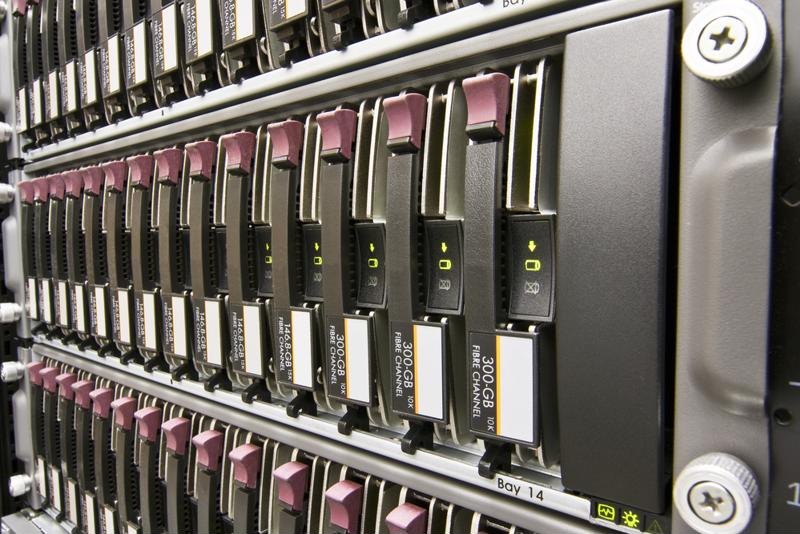
As disaster recovery strategies go, ones that include a hot site are generally top-of-the-line. BizTech Magazine contributor Mike Chapple compared hot sites to Cadillac cars – nice, runs smoothly and generally more expensive than other options. Hot sites are much like warm ones in that the machines are updated with the software and technology necessary to conduct a full backup in the event that the original computing equipment is incapacitated.

The main difference between hot and warm sites, however, is the fact that the backed up data is already loaded onto the machines.

As a result, hot sites have the shortest RTO because there is minimal loading required to get the equipment in working order. It is also the most expensive of the options because your company has to keep this alternate site up and running even when you’re not using it, as a precautionary measure.

Bringing it together

It’s crucial to have a dedicated DR plan so that when the unthinkable occurs, your company isn’t left high and dry with no data or applications. The Institute for Business and Home Safety found that 25 percent of businesses don’t recover from a major disaster, according to the Small Business Administration. You do not want your company to be on that list. So the question remains: What kind of DR site should you invest in?

Is a hot site your best option for business continuity?Is a hot site your best option for business continuity?

An important point to note is that by determining the recovery point objectives for your business-critical data, it may be easier to make a decision concerning the nature of your DR plan. Continuity Central Archive’s Charlie Maclean-Bristol noted that it’s important to assess the maximum tolerable period of disruption – or the amount of time it would take for disruption of business to become unacceptable.

To this end, another option would be to consider utilizing a hybrid approach by combining different capabilities of each of these DR solutions. You may be able to utilize one solution that nets you a shorter RTO, which should be the ultimate goal of any strategy.

Which kind of DR site do you think your company would most benefit from? Contact ISG Technology today for more information about how each could impact business continuity for your specific business.

Disaster recovery sites: Part 1 of 2

Having an effective disaster recovery plan is a crucial aspect of any business strategy. PC Magazine reported that despite the clear importance of having a good DR plan in place for every level of your business for when the unthinkable happens, an estimated 60 percent of companies that experience data loss will shut their doors within six months, according to the National Archives and Records Administration. Not only that, but 93 percent of companies that lose a data center for more than ten days following a natural or other kind of disaster filed for bankruptcy within one year.

It is clear that when it comes to ensuring business continuity and making the most out of an emergency situation, the plan you have in place can make or break your organization.

There are different kinds of DR plans. In this part 1 of 2, let's take a look at a couple strategies that involve cold and warm sites and see how they can be used in certain events or situations:

1. Cold DR sites

A cold DR server or data center is one that exists to serve as backup infrastructure in the event that the main server is compromised. This kind of backup is useful in situations where the first site were to become completely unviable, as in the case of weather emergencies like fires or hurricanes. When you invest in a cold site, you basically set up a completely new data center, complete with ventilation units, cooling equipment and dedicated servers – but, according to BizTech Magazine's Mike Chapple, everything is dark until it's needed.

These kinds of strategies tend to be less expensive than the others, because companies do not have to maintain heating or electricity costs that fully functioning equipment would incur. The downside to cold sites, however, is that the recovery time objective is often longer, because the equipment has to be booted, applications have to be installed and data has to be loaded from backup tapes.

"It should be no surprise that the recovery time for cold sites is measured in days or weeks rather than in hours," Chapple noted.

"Warm sites can reduce RTO following a disaster."

2. Warm DR sites

Warm disaster recovery backup sites, on the other hand, represent a step up from the cold DR servers as far as RTO is concerned. With a little bit more expense, companies can invest in an off-premises solution that functions similarly to a cold site, except for the fact that the servers boot up every once in a while to do updates based on the replicated equipment – meaning the applications or software required upon disaster recovery would already be loaded onto these servers. Company data is often also stored at a warm site.

This can take RTO down from days or weeks to mere hours or minutes following a disaster. While it is more expensive, for some companies, the risk of having their operations down for days or weeks while a cold site boots up is not feasible. Warm sites, therefore, offer a reduced time frame and better support business continuity practices. However, according to Data Center Knowledge, it takes longer for companies to boot up warm sites than hot ones.

Does your company have a cold or warm DR site?Does your company have a cold or warm DR site?

In Part 2, we will explore hot DR sites and see how to bring all of this information together into a cohesive DR strategy that will positively impact your company. For more information about DR plans and how to implement them, contact ISG Technology today.

Cloud types and their business applications: Public and private clouds

The cloud is absolutely revolutionizing how companies are dealing with their data needs. Data storage and processing are the key to a successful business in the modern world, and the variety of cloud storage services out there are allowing companies to take advantage of this truly amazing technology. 

And while this multitude of services is certainly great in terms of providing options, deciding on which one to choose can seem like a daunting task. This technology is so new that many business owners simply don't know how it works, and as such many of them are simply opting to avoid cloud services altogether. 

We at ISG Technology believe the cloud is the future of business, and we hate seeing people miss out on this truly revolutionary technology due to its seeming complexity. So, to clear up any confusion, we've put together this two-part series on what the different kinds of clouds are and what they can be used for. 

Public cloud

This is a good place to start when discussing cloud managed services because it's one of the more basic options. A public cloud is where physical hardware that is owned and operated by a managed service provider in its own facility is leveraged for data storage and other uses by a paying client. These MSP-owned facilities house multiple clients, which is why they are considered "public."

The big benefit of the public cloud comes from its use of the equipment already procured by the MSP. Due to the fact that the hardware has already been paid for, and maintenance is a responsibility of the MSP, the public cloud client operates on a pay-as-you-go model that is highly scalable and extremely reliable. The infrastructure is also shared by multiple companies, which further reduces cost. 

Basically, small and medium-sized businesses can get a lot of use out of the cloud. The lighter load on your budget is great for a business just starting out, and company administrators can rest easy that the equipment storing their data will be safe, as MSPs are experts at handling their hardware. These advantages are the driving force behind IDC reporting that the global public cloud computing market is expected to reach $70 billion before the end of 2015. 

While there are obviously many benefits to the cloud, there are also disadvantages. The biggest of these has to do with security. Because the public cloud requires companies to share computing space, there is an increased risk of data leakage. Another client may accidently gain access to your data, or an outside hacker might gain access to it due to a vulnerability in a different company's defenses. 

The public cloud's main disadvantage is security. There's a bit of a security concern within the public cloud.

Private cloud

Much like its name would suggest, the private cloud allows for the same services of the cloud in a more secluded environment. All the hardware is specifically for one business, and a specialized network is set up just for them. The speed of application deployment and scalability are the same. However, a private cloud can be both on-site or off. This allows for a lot more versatility and flexibility.

The security is also miles better than its public counterpart. Because the network and hardware are specifically for one company, all the security concerns listed above aren't a problem. Another great advantage private cloud storage services have over the public variety is in terms of compliance. A company that operates in an industry with very stringent compliance standards would do well to invest in private cloud managed services because the organization can tool its cloud environment to specific needs. 

However, it's not all good news in the private cloud. The main disadvantage comes from the massive cost of having your own private area of an MSP's data center. Smaller companies simply won't be able to operate entirely on a private cloud data storage model because they won't be able to afford it. This is one reason why many companies don't opt for a private cloud, as the private cloud market was estimated by Technology Business Research Inc. to be worth $41 billion in 2014

Of course, these two models aren't all the cloud has to offer. In the next installment, we'll discuss what hybrid cloud storage services are, and why they're often seen as the better option for modern businesses.

What can cloud-based DRaaS bring to your company?

As businesses are now completely dependent on data and computer systems, Disaster Recovery as a Service is quickly becoming something companies need in order to keep operations running. In fact, Transparency Market Research found that the DRaaS market is expected to rise at a compound annual growth rate of 36 percent through 2022

Obviously, a lot of companies are beginning to see the many benefits of outsourcing their disaster recovery needs. That being said, many of these businesses have yet to integrate the cloud into their plans. 

While cloud-based disaster recovery plans aren't for everybody, they actually have many advantages that the average business can benefit from. 

The cloud allows for faster recovery

A lot of the cloud's popularity comes from the massive benefits to efficiency that it offers. This level of efficiency is also seen within disaster recovery plans that are based around cloud services. 

As Bill Claybrook stated in a TechTarget article, much of the cloud's agility in putting a company back on its feet when disaster strikes has to do with its physical server requirements. The cloud needs fewer servers than required by traditional disaster recovery plans, and as such has fewer actions to carry out when executing the plan. This means faster recovery for your company, which translates to less downtime and less money lost. 

Another great benefit of DRaaS is the use of service-level agreements by both the managed service provider and the company receiving the disaster recovery solution. An SLA lays out the MSP's minimum requirements in terms of services provided. In this case, an SLA can define a concrete timeline for disaster recovery, which can give company administrators peace of mind knowing that their business will be up and running within the preordained timeline. 

Costs are lower

When you do disaster recovery in-house, you're basically dumping a lot of extra work on your IT professionals. These employees have a lot of jobs outside of disaster recovery, and DRaaS allows them to fulfill your company's technical goals without being hindered by working on and testing a DR plan. 

Costs are also lowered in terms of hardware when receiving DRaaS. When you outsource your disaster recovery to an MSP, you can rest assured that the vendor has hardware that is far superior to your own. An MSP's livelihood comes from having reliable services, which means having some of the best equipment money can buy. 

This means that you'll be getting the benefits of the best hardware without having to actually pay for it yourself. And considering the fact that a Databarracks survey found that 21 percent of data loss events occur due to hardware failure, you can rest assured that your MSP's equipment will work better and longer than your own. 

That being said, the cloud isn't for everyone. Some companies simply need on-site disaster recovery, while others would benefit from a hybrid of these solutions.

Thankfully, ISG Technology makes choosing a DR solution simple. With services ranging from cloud-based, hybrid or even on-site disaster recovery models, ISG Technology can help your company develop a plan to increase business continuity and decrease downtime

Top 3 reasons why companies choose managed services

When it comes to managing complicated IT infrastructure, businesses in every industry need as much support as they can get. Business complexity is generally frowned upon in the technology world, because complication within the networking infrastructure can lead to headaches for administrators down the line. Investing in managed services can help decrease this kind of complexity and give IT managers peace of mind knowing their networks are in good hands. But why?

It’s clear that small, medium-sized and large businesses are turning to outsourcing IT. According to a report published by MarketsandMarkets in early 2015, the market for managed services will reach a value of $193.34 billion by 2019, growing at a compound annual rate of 12.5 percent. Data centers, mobile networks and communications capabilities are all things that fall under the umbrella of this market.

The question remains of why businesses should migrate toward hiring an outside company to manage their internal network infrastructure. Let’s take a look at a few reasons IT outsourcing provides companies with the right kind of support and capabilities to manage complicated networks:

1. It can be less expensive than hiring in-house
In the increasingly complex world of IT infrastructure, it’s crucial to consider both the capital and operational expenditures of investing in new equipment or personnel. Oftentimes, it can be a financial hassle to hire specialized IT employees – and then keep them on the payroll. One of the biggest benefits of outsourcing is not having to maintain an in-house IT department.

Since you’re reducing operational expenditures in the long run by hiring an outside company to manage your network infrastructure, those saved funds can be put to good use elsewhere. Demand Media contributor Samantha Gluck noted that when you turn to IT outsourcing, you can better manage expenses and therefore place more financial focus on the core functions of your business.

Keeping an in-house IT staff can be expensive.Keeping an in-house IT staff can be expensive.

2. Gain resources you wouldn’t have access to otherwise
Managed services providers often boast partnerships with larger IT companies that have the resources and personnel on hand to solve issues and keep your network running smoothly. By outsourcing IT infrastructure, small businesses can become more competitive, because they’re utilizing similar resources as larger opponents in their respective industries.

“Outsourcing IT systems and services creates a more equitable playing field between small firms and large enterprises,” Gluck wrote.

“You don’t have to worry about managing complicated network infrastructure.”

3. Decreases IT complexity
Forbes contributor Michael Fauscette reported that migrating to a third-party service provider would be a good way to reduce complexity within computing environments. Once your network is off your shoulders and in the hands of a competent managed service provider, you don’t have to worry about managing complicated network infrastructure. In addition, when complexity is reduced, resources can be freed up for other critical business operations, and CIOs can turn their attentions to enhancing quality of services for clients and generating revenue.

Contact ISG Technology today to find out how our managed service professionals can pair you with the right tech solutions you need and help you manage your complex IT environments.


Join the ISG Technology Team


Data breaches and your company's image

Reputation is a huge part of being able to conduct business. Your company can advertise all it wants, but if you don’t have a reputation for providing clients with the best product or service possible, you won’t be making very much money.

And while providing high-quality service is a great way to create buzz about your business, it can all be taken away with a simple breach of your company’s information. Study after study has shown that when a company is the victim of a data breach, its brand value invariably decreases.

How valuable is brand reputation?
A 2014 report created by Forbes and assisted by IBM showed that becoming the victim of a data breach can cause very real damage to a company’s reputation. The study found that 46 percent of organizations experienced damage to their company’s image as the result of a data breach. It also found that data breaches and theft were ranked as the most common threat to a business’s reputation.

What this data reveals is that clients don’t like the idea of doing business with a company that has become the target of cybercriminals. This is an expected response, considering the amount of personal information required to do business these days. No one wants to give information to a company with a track record of losing said information.

Additionally, the extent to which a company’s reputation is harmed can be substantial, depending on the type of breach and the industry the organization operates within. A Ponemon Institute study on the impact of data breaches on brand reputation found that following an attack on a company’s data center, the value of the company’s brand could decline anywhere between 17 percent to over 31 percent.

For the companies within the study, this translated to a decrease of brand value ranging from $184 million to $332 million. These staggering numbers are a testament to just how much reputation matters to your clients, and should make every business question its current data storage security.

Any company currently worried about its security should absolutely contact ISG Technology. Their team of highly trained security professionals can provide a Security Assessment to make sure your network is safe and secure. They also provide a Managed Firewall Solution, which blocks unsafe Web content and helps to keep the reputation your company has worked so hard to achieve.

What to consider when making the leap into the hybrid cloud

Over the past few years, the hybrid cloud has emerged as the deployment model of choice for businesses that want to enjoy the scalability and flexibility of hosted solutions, but are not yet ready to move every single critical asset to such an environment. This approach allows organizations to maintain some amount of control over their resources while still supporting further expansion into the cloud. It is perhaps no surprise, then, that so many businesses view the hybrid cloud as the ideal way to strike a balance between governance and agility.

According to a December 2014 IDC report, around 65 percent of enterprise-scale IT operations will have fully supported the hybrid cloud by the end of 2015. Cloud and virtualization security strategist Andrea Knoblauch commented in a Cloud Best Practices piece that this surging interest in hybrid could be largely chalked up to its ability to easily provide many of the performance and procurement benefits associated with the cloud, while leaving ample room for further customization down the road if necessary.

"Simply put, hybrid clouds provide all the benefits of a regular cloud environment such as integration, networking, management and security, but applied to a partially internal environment," she wrote. "This means an organization can start with in-house computing resources, add external cloud resources to scale up and then go back and replace those cloud sources either with more on-premise infrastructure, or continue to leverage cloud solutions to balance manageability and security with the low-cost benefits of outsourcing to cloud providers where it makes sense."

Businesses should take care to follow a solid migration strategy when moving to a hybrid cloud deployment.Businesses should take care to follow a solid migration strategy when moving to a hybrid cloud deployment.

IDC researchers noted that in light of the hybrid cloud's growing popularity, organizations will have to make some fundamental changes in the way they operate in order to accommodate this new environment. With that in mind, here are a few key factors to consider when planning a hybrid cloud deployment:

Lay out a strategy
It may be tempting to begin moving assets to the cloud without first figuring out the details about what that hybrid environment will ultimately look like. However, as TechTarget noted, that is more often than not a recipe for disaster. Moving anything to the cloud can present its own set of challenges, so it is important to plan accordingly at the outset of any cloud migration project, whether it be a private, public or hybrid deployment. 

There are a few basic ways organizations can go about migrating to the cloud. While a "life and shift" approach may appeal to business leaders due to its relative simplicity, it can bring with it a number of issues that will prevent stakeholders from extracting the cloud's full potential. Instead, as Ovum analyst Laurent Lachal told TechTarget, a preferable method would be to alter code within the apps that have been targeted for migration, making the whole process much easier. Organizations can go even further and make more drastic changes to the code to essentially transform on-premises assets into full-blown cloud applications.

Prepping apps for migration is just one critical step in the preparation process. Speaking with TechTarget, Altisource CTO Girish Juneja recommended adhering to two other primary best practices when crafting a cloud deployment strategy: establishing permanent fundamental configurations and developing strong security measures.

"No organization has to go through the cloud migration process alone."

Establish a connection between clouds
At the heart of the hybrid cloud is the notion that the public and private clouds should work in tandem, allowing businesses to leverage the benefits of both while minimizing their drawbacks. In practice, this might mean that apps hosted in public and private clouds will need to interact, necessitating some degree of connection and communication between the two environments. As TechTarget explained, cloud management and orchestration solutions can be essential here, helping businesses oversee and manage their complex cloud setups.

The thing to keep in mind during all of this is that no organization has to go through the cloud migration process alone. By working with qualified managed services providers, businesses can ensure that they lay out a roadmap to success in the cloud. Furthermore, these third parties can help optimize cloud deployments after they have been launched, improving the performance of such environments over time.